


Have you ever wondered why some competitors always appear at the top of search results while your website stays hidden? Many owners feel like they are shouting into a void without seeing any real return on their investment.
About 47% of entrepreneurs manage their own marketing tasks to save money. This makes ppc a very practical choice to any growing company with limited resources.
PPC advertising lets you pay only when someone clicks your ad. This offers a controlled approach to online growth that traditional methods often lack.
We want to help you turn ad spend into website traffic and then convert that traffic into paying customers. This guide simplifies ppc setup to ensure every dollar works toward your bottom line.
By following these steps, you can achieve results that deliver real value. We will cover choosing platforms and tracking what drives a successful business outcome. Let’s start building your ppc strategy.
Key Takeaways
- Pay only when a potential customer clicks your advertisement.
- Manage your advertising budget with total precision and transparency.
- Generate measurable income without relying on expensive guesswork.
- Reach targeted audiences who are actively searching your services.
- Convert increased website traffic into a stronger bottom line.
What is PPC and Why It Matters for Small Businesses
Modern growth for local companies often relies on a solid grasp of how paid search traffic works. We see many owners struggle to choose the right path, so we aim to provide clarity on this powerful tool.
Success starts with knowing where your money goes and how it brings people to your door. This model ensures you stay in control of every cent you spend on outreach.
Understanding Pay-Per-Click Advertising Basics
The term ppc refers to a system where you pay a fee only when a user clicks your ad to visit your website. It is a direct way to buy visits rather than trying to earn them through organic methods alone.
These ads appear as text on search results or as images across social media platforms and partner websites. By bidding on specific terms, you ensure your message reaches customers at the exact moment they need your help.
The Growing Importance of PPC in Digital Marketing
In the modern landscape of digital marketing, being visible when a person is ready to buy is vital. Most people now search online before making any purchase decision or visiting a store.
If small businesses do not have a presence in search results, they often lose to larger competitors. This form of marketing levels the field by allowing you to target local niches with great precision.
How PPC Differs from Traditional Advertising
Traditional advertising like billboards or radio requires a large payment before you see any results. You essentially pay for exposure and hope that the right people see your message.
With ppc, you only pay for actual engagement, making it a very efficient choice for growing businesses. It allows you to start with a small budget and scale up as you see a clear return on your investment.
| Feature | Traditional Advertising | PPC Advertising | Business Impact |
|---|---|---|---|
| Payment Model | Upfront for exposure | Pay per click only | Lower financial risk |
| Targeting | Broad demographics | Specific search intent | Higher lead quality |
| Result Tracking | Estimated reach | Exact conversion data | Clear ROI measurement |
| Budget Control | Fixed high costs | Flexible daily limits | Scalable growth |
Benefits of PPC Campaigns for Small Business for More Revenue
Every small business owner wants to see a direct link between their marketing spend and their bottom line. One of the primary benefits of using digital ads is the level of visibility you gain over every cent spent. We find that this clarity helps owners feel more confident in their growth strategies.
Paid search removes the guesswork from traditional advertising. Instead of hoping people see a billboard, you put your message exactly where customers are looking. This approach ensures that your marketing efforts align with actual consumer behavior.
Complete Budget Control and Flexibility
Most platforms allow you to set a strict daily budget. This means you never spend more than you planned for your business. You have the power to stop or start your ads at any time with a single click.
You can start with as little as $10 per day. Once you see which ads perform well, you can scale your spending safely. This flexibility prevents the budget overruns that often plague other forms of media.
“The beauty of digital advertising lies in its ability to be measured, adjusted, and perfected in real-time.”
Immediate Traffic and Measurable Results
Unlike SEO, which takes months to show progress, ppc small businesses see traffic the moment their ads go live. You receive concrete results and reporting on exactly where your money goes. This transparency helps you calculate your return on investment quickly.
Detailed reports show you which keywords lead to actual sales. You can see the specific time of day and the devices people use when they click. This data allows us to refine your strategy for even better performance over time.
Precise Audience Targeting Capabilities
Strategic targeting ensures your ads appear only to your ideal audience. You can reach people based on their location, interests, and even the specific products they search for online. This precision reduces waste and helps ppc campaigns for small business for more revenue become more effective.
You are no longer casting a wide net in hopes of a catch. Instead, you are speaking directly to individuals who are already interested in your services. This focus leads to higher quality leads and more consistent sales.
Low Barriers to Entry for Small Businesses
You do not need a massive team or a huge creative agency to start your first campaign. Most platforms are user-friendly and allow any business to launch an account in minutes. It is a level playing field where your strategy matters as much as your spend.
Basic campaigns require very little technical knowledge to get off the ground. Small teams can compete with larger corporations by focusing on specific, local niches. This accessibility makes paid search a vital tool for modern entrepreneurs.
| Feature | Small Business Benefit | Impact on Revenue |
|---|---|---|
| Spend Control | Set strict daily limits | Higher Profit Margins |
| Instant Visibility | Immediate website traffic | Faster Sales Cycles |
| Precise Filters | Reach only likely buyers | Improved Lead Quality |
How the PPC Auction System Works
The way search engines decide which advertisements appear is through a lightning-fast digital auction. Every time a user types a keyword into a search bar, the system evaluates which ads provide the most value.
It is not simply a matter of who spends the most money. Instead, the process looks at three main factors: your maximum bid, the quality of your content, and the expected performance of your extensions.
This ensures that users see relevant information while businesses of all sizes have a fair chance to compete. We believe that understanding this balance helps small businesses save money and reach the right people.

Understanding the Bidding Process
In a ppc auction, you set a maximum amount you are willing to pay for a click. However, the system rarely charges you that full amount.
You only pay one cent more than what is needed to beat the advertiser directly below you. This protects your budget while keeping the marketplace competitive and honest.
By disclosing your maximum limit, you maintain control over your spending. You will never be surprised by a bill that exceeds your comfort level.
Quality Score and Its Impact on Ad Placement
Google assigns a Quality Score from 1 to 10 based on how relevant your ads are to the user. This score considers the landing page experience and the likelihood that someone clicks on your link.
A high score acts like a discount. It allows you to achieve a better position even if your bid is lower than a competitor’s.
Focusing on quality improves the user experience. Platforms reward this by lowering your costs, making it easier for smaller budgets to win.
How Ad Rank Determines Your Position
Ad Rank is the final calculation that determines where you land on the page. It combines your bid with your Quality Score and additional information like site links.
| Component | Role in Auction | Benefit to You |
|---|---|---|
| Maximum Bid | Sets the ceiling | Financial control |
| Quality Score | Measures relevance | Lower cost per click |
| Ad Extensions | Provides detail | Higher visibility |
We focus on improving these quality factors so your ppc campaigns remain cost-effective. By prioritizing relevance, you can outrank big-budget competitors and drive more revenue to your business.
- Instant Auctions: Every search triggers a new evaluation of current bids and quality.
- Beyond Money: Relevance and expected engagement matter as much as your budget.
- Smart Savings: The system charges the minimum needed to maintain your rank.
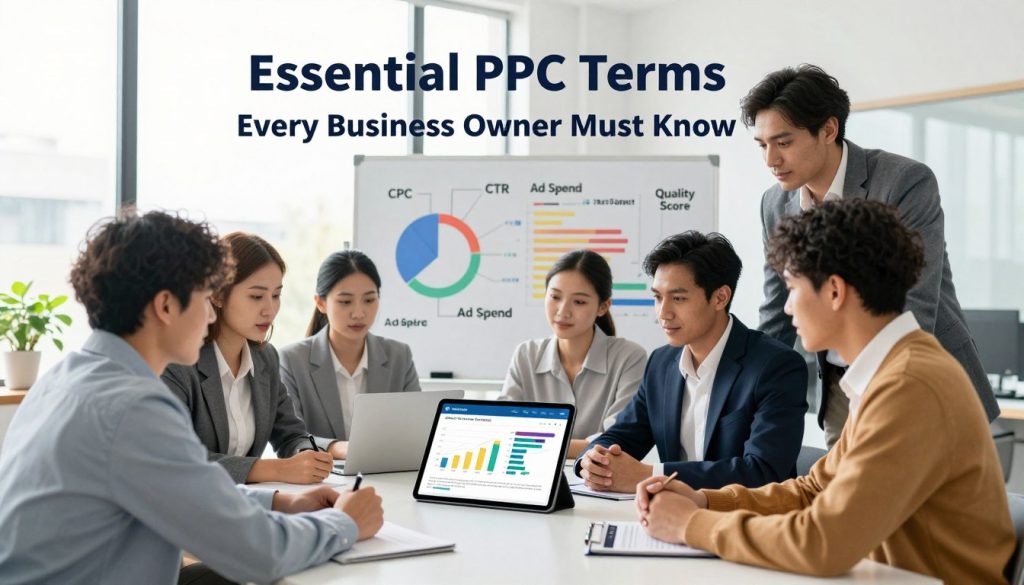
Essential PPC Terms Every Business Owner Must Know
To make sense of your marketing reports, you need to know the core definitions that drive performance. These terms act as the foundation for your strategy. Knowing them helps you avoid confusion and invest your budget wisely.
We believe that clarity is the first step toward growth. When you understand the data, you can make better choices for your brand.
Click-Through Rate (CTR) and Why It Matters
CTR shows what percentage of people who see your ads actually click them. It reveals how compelling your copy is to your target audience.
A high rate means your message resonates well with potential buyers. This also helps improve your Quality Score with search engines.
Cost Per Click (CPC) Explained
CPC is the actual amount you pay when someone clicks your link. This cost varies based on competition and your Quality Score.
Understanding this helps you set a realistic daily budget for your ppc efforts. It ensures you do not overspend on expensive keywords.
Return on Ad Spend (ROAS) Calculations
ROAS measures the revenue earned for every dollar spent on advertising. For example, a 5:1 return means you earned $5 for every $1 spent.
This metric proves whether your campaigns are truly profitable. It is the ultimate check on your marketing efficiency.
| Metric | What It Measures | Goal |
|---|---|---|
| CTR | Clicks per impression | Higher relevance |
| CPC | Price per individual click | Cost efficiency |
| ROAS | Revenue per dollar spent | Profitability |
Conversion Rate and Attribution Models
A conversion occurs when a visitor becomes a customer or completes a goal. This might be a direct sale or a new lead through a sign-up form.
Attribution models help you see which part of the journey deserves credit for that sale. These terms ensure you track the full value of your ppc investment.
“Measurement is the first step that leads to control and eventually to improvement.”
Step 1: Choose the Right PPC Platform for Your Business
Your choice of advertising platform should align directly with where your customers spend their time. We believe that picking the right digital space is the foundation of a successful strategy. This decision ensures your business reaches the right people at the moment they are ready to buy.
Google Ads: Maximum Reach and Visibility
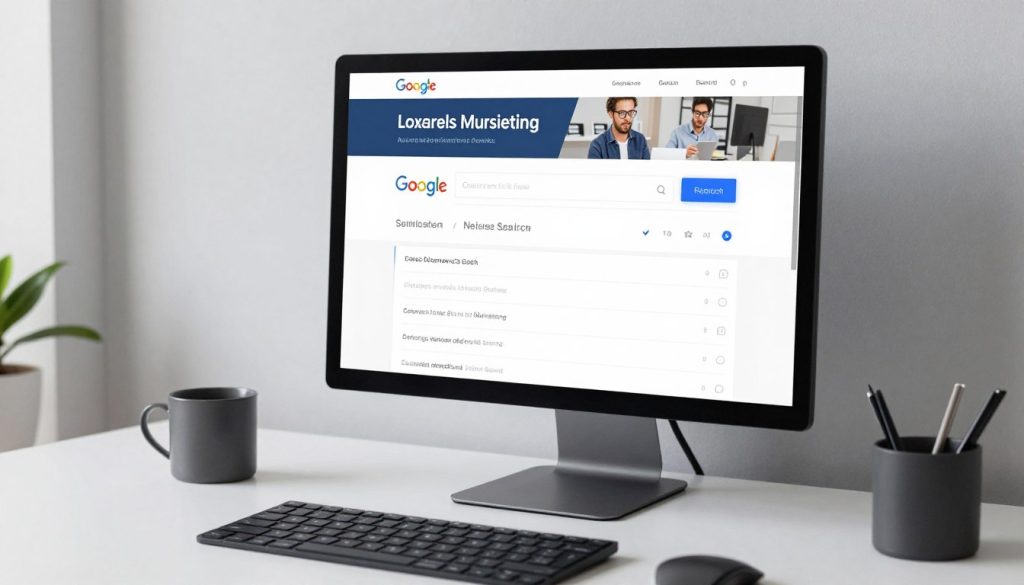
Google ads should be your starting point if you only have the budget for one platform. This network dominates the search market and reaches a massive audience of active buyers.
People using this service are actively searching for solutions or products. This means they have high purchase intent when they see your message. You can gain exposure across Search, YouTube, and Gmail through this single network.
Microsoft Ads: Expanding Your Search Network
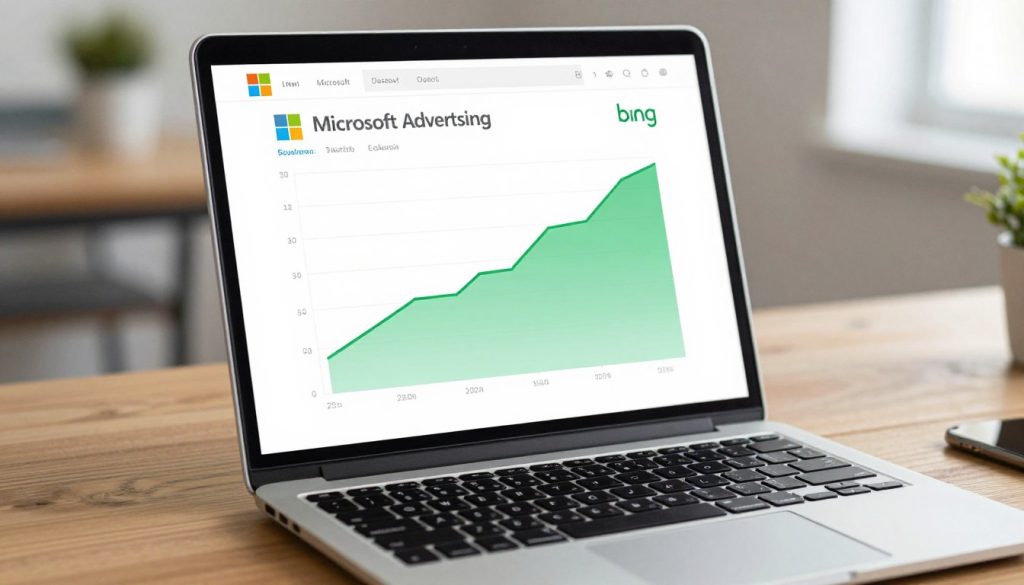
Microsoft Advertising helps your business reach users on Bing, Yahoo, and DuckDuckGo. This platform often features lower costs per click because there is less competition than other networks.
It is a smart way to find a high-income audience that might not use common search tools. The users on this network often represent a slightly older demographic with significant buying power.
Facebook and Instagram Ads for Social Targeting
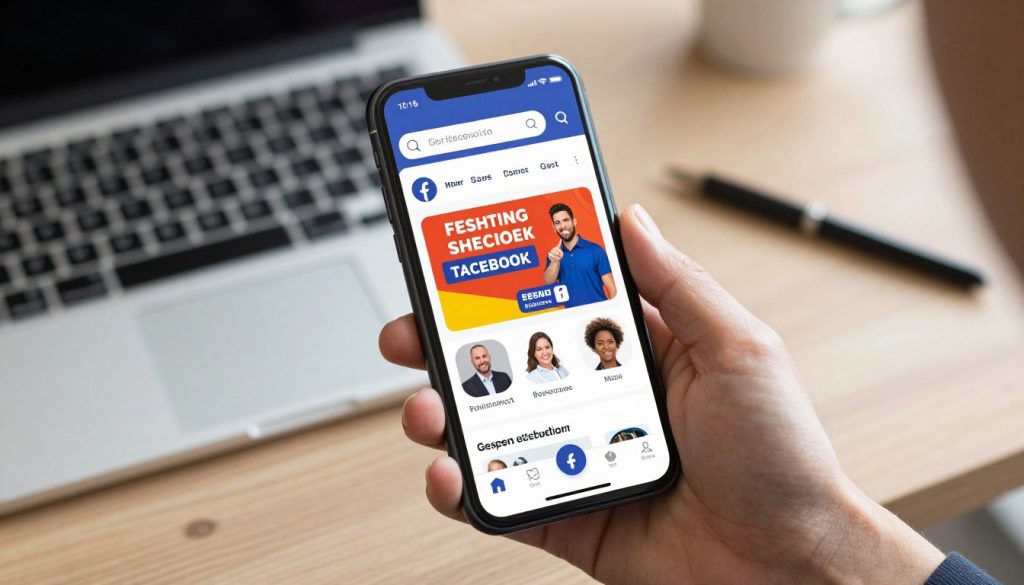
These social ads work differently because users are browsing feeds rather than searching for a specific product. Facebook offers powerful targeting based on interests, life events, and job titles.
This approach is perfect for building brand awareness. You can reach people who do not know they need your service yet. It allows you to spark interest through visual storytelling and creative imagery.
Matching Platform to Your Business Goals
Aligning your platform choice with your specific goals ensures you do not waste your marketing budget. Every platform serves a different purpose depending on what you want to achieve.
A search-based campaign on google ads is perfect for immediate sales from high-intent buyers. If your product is visually appealing or lifestyle-driven, social media ads will likely provide a better return. We suggest starting with one platform that matches your customer behavior before expanding your reach.
Step 2: Conduct Effective Keyword Research
Effective keyword research ensures your budget reaches the most qualified prospects online. Choosing the wrong phrases wastes your money on clicks that will never turn into sales. We prioritize finding the phrases that your ideal customers actually use during their online search journey.
Using Keyword Research Tools to Find Opportunities
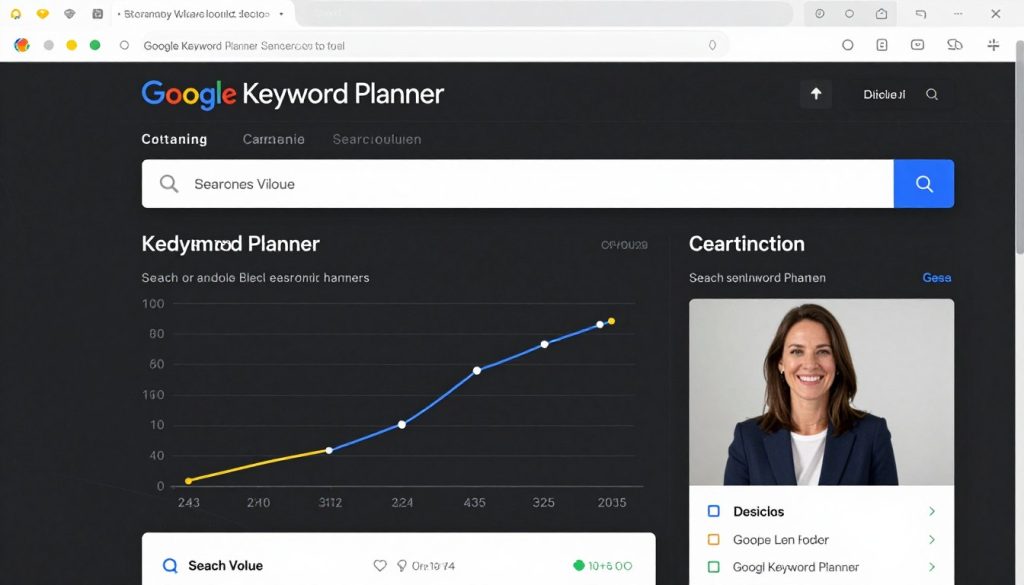
Start by brainstorming the exact words your customers type when they need your help. Use free tools like the Google Keyword Planner to find search volume and competition data. You can also gain insights by watching your competitors or using the autocomplete feature on a Google search page.
We recommend looking at paid tools like SEMrush or Ubersuggest for more detailed data. These platforms help you uncover hidden opportunities your competitors might miss. The goal is to build a foundation that makes your ppc campaigns profitable from day one.
Identifying High-Value Keywords with Low Competition
A good keyword balances a high volume of searches with manageable competition levels. Avoid ultra-competitive terms that cost twenty dollars or more per click when you are just starting. Instead, look for long-tail phrases that indicate a specific need.
These longer phrases often have lower costs and higher conversion rates. Focusing on these specific keywords allows your small business to compete effectively without overspending. It is about being smart with your ppc budget rather than just being the highest bidder.
Understanding and Matching Search Intent
Intent matters much more than the total number of monthly searches. A keyword with only one hundred searches but high purchase intent is very valuable. It will often outperform an informational term that has ten thousand searches.
We look for “buying” signals in the keywords we select for your campaigns. Someone searching for a “plumber near me” is ready to hire someone immediately. Matching your ad to this specific intent is the fastest way to grow your revenue.
Building Your Negative Keywords List
Building a list of negative keywords is the best way to save your advertising budget. These are the specific search terms that you do not want your ads to show for. Defining where your ad should not go is just as important as choosing where it should.
For example, if you sell premium services, you should exclude words like “free,” “cheap,” or “DIY.” This prevents you from paying for clicks from people who are not going to buy. We suggest performing a regular research review of your reports to find new terms to exclude.
Regularly refining these keywords keeps your traffic qualified and your costs low. This proactive approach ensures that every dollar spent is an investment in a potential customer.
Step 3: Structure Your Campaign and Ad Groups
Setting up a clear framework for your advertising helps you manage costs and track performance effectively. Proper organization is the backbone of any successful campaign. We believe that a logical hierarchy determines how efficiently you can monitor and optimize your ads over time.
Creating Campaign Categories by Business Objectives
Start by creating campaigns based on major product categories or high-level goals. For example, a retail business might use an overarching theme like “Fall Items.” This allows you to set specific budgets for different seasonal priorities.
Each campaign should have a dedicated purpose to prevent your budget from being spread too thin. By aligning these structures with your actual business goals, we ensure your strategies remain focused and profitable. This level of control is essential for long-term growth.

Organizing Ad Groups Around Keyword Themes
Within each category, you should split your campaigns into smaller, tightly themed units called ad groups. If your main category is “Fall Items,” your ad groups might be “Fall Sweaters,” “Fall Scarves,” and “Fall Makeup.” This precision makes your messaging much more persuasive.
Using focused ad groups allows you to use specific keywords that match exactly what the customer wants. When you deliver highly relevant ads, your Quality Score naturally improves. This helps lower your costs while increasing the chance of a sale.
Best Practices for Account Organization
A single campaign can house multiple ad groups, but you must keep them distinct. Avoid stuffing dozens of unrelated keywords into one group because you cannot write one ad that fits every search term perfectly. Clear naming conventions will also save you time when analyzing weekly performance reports.
| Structure Level | Primary Focus | Example Selection |
|---|---|---|
| Campaign | Budget and Goal | Emergency Plumbing |
| Ad Group | Specific Service | Burst Pipe Repair |
| Keywords | Search Terms | “24/7 plumber near me” |
Good organization prevents chaos as your account grows. It makes it easier to see which services generate the best return on investment. By following these simple steps, we help you identify what works and eliminate what wastes money.
Step 4: Write High-Converting Ad Copy
Crafting the right message ensures your budget goes toward qualified leads instead of wasted clicks. Your ads are the only way to convince a searcher to choose you over a competitor. Every word must earn its place to avoid wasting money.
We believe that clarity is more important than cleverness. To succeed, you must speak directly to the person behind the screen. This section covers how to turn brief text into a powerful sales tool.
Crafting Compelling Headlines That Get Clicks
Headlines are what users see first when they search. They are the most vital part of your message. We recommend including your main keyword and a clear benefit here.
This grabs the audience‘s attention immediately. A strong headline should solve a problem or offer a unique selling point. Avoid vague language and stay focused on the user’s goal.
Writing Persuasive Ad Descriptions
While PPC ads are relatively small, usually up to 90 characters, you must make every letter count. Avoid generic phrases like “quality service” or “great prices.” Be specific about what makes you different.
Your description should address exactly what customers want. Always include a clear call-to-action like “Get a Free Quote” or “Shop Now.” This tells the searcher exactly what to do next.
Leveraging Ad Extensions for Better Performance
Extensions provide extra content without using your limited text space. They expand your presence on search result pages and improve visibility. These tools give people more reasons to engage with your business.
For a local restaurant, we suggest adding location and call extensions. These help users find your address or call you directly from the search result. It removes friction and encourages immediate action.
| Ad Element | Max Length | Primary Goal |
|---|---|---|
| Headline | 30 Characters | Grab attention |
| Description | 90 Characters | Explain value |
| Extensions | Varies | Add utility |
Testing Multiple Ad Variations
Never settle for just one version of your copy. We recommend testing multiple ads within each group to see which performs best. Try different headlines and calls-to-action to find the winner.
Let your variations run until they gather enough data. We usually wait for at least 100 to 200 interactions before deciding which one works. This ensures you send qualified traffic to your landing pages.
“The goal of advertising is to provide the right message to the right person at the right time.”
Step 5: Set Strategic Bids and Budgets
Effective bidding turns your advertising spend into a predictable engine for growth rather than a random expense. We believe a smart budget ensures your small company finds new customers without wasting resources. You must align your financial limits with your specific growth targets.
Calculating Your PPC Budget Based on Revenue Goals
One effective way to set a ppc spending limit is by working backward from your desired income. We suggest using a simple formula: Budget = (Target Revenue ÷ Conversion Rate) × CPC. This helps you understand the exact cost of reaching your goals.
For example, imagine you want $10,000 in revenue with a 2% conversion rate and a $3 average click cost. You would need to spend approximately $15,000 to generate enough traffic to hit that mark. This calculation keeps your expectations grounded in your real business economics.
Understanding Industry Cost Benchmarks
Industry benchmarks provide a useful reality check for your campaign planning. While the average cost per click in 2026 sits at $5.42, your specific market determines the actual price. Competitive fields like law or insurance often face much higher rates than local retail.
| Industry Type | Estimated CPC | Competition Level |
|---|---|---|
| Legal & Finance | $9.00+ | Very High |
| Retail & Services | $1.63 – $5.42 | Moderate |
| Overall Average | $5.42 | Balanced |
Choosing the Right Bidding Strategy
You should select strategies that match your primary objective, such as traffic volume or sales. Use manual CPC for total control or target ROAS to prioritize a high return investment. Automated options can save time, but they require consistent data to work effectively.
Avoiding Common Budgeting Mistakes
A common error involves ignoring the extra costs of ppc, such as software tools or creative design. Never launch a campaign and leave it alone; successful owners monitor performance daily. We recommend starting with a modest budget and scaling up only after you see profitable results.
Setting your budget too low can also prevent you from gathering enough data to optimize. Ensure your business allocates enough funds to test different ads and landing pages. Constant adjustment based on real-world performance is the only way to minimize waste.
Measuring and Optimizing PPC Campaign Performance
Launching ads without a way to measure them is like driving a car in the dark. We believe that every dollar you spend should have a clear purpose in your marketing plan. To see real growth, you need to look at the data behind your clicks. Measuring your performance helps you understand where your revenue truly comes from.
Data allows us to stop guessing and start growing with confidence. Small business owners should focus on the metrics that lead to actual sales. By watching the right numbers, you ensure your marketing budget remains a smart investment.
Setting Up Conversion Tracking Properly
You need to know which keywords lead to a sale or a phone call. Without tracking, you are essentially flying blind with your marketing spend. A conversion is the bridge between a simple click and a new customer for your business.
This process shows you which parts of your ppc strategy actually generate leads. We recommend tracking every meaningful action, not just final sales. Tracking quote requests and email signups helps you see the full journey of your customers.
Installing Tracking Pixels on Your Website
A pixel is a small chunk of code you place on your website to record actions. These pixels track when users take a specific step, like adding an item to a cart. This data is vital for understanding how people interact with your brand online.
Pixels also allow us to build remarketing audiences for your business. This means you can show ads again to people who left your website without buying. It is a powerful way to bring interested visitors back to finish their purchase.
Monitoring Key Performance Metrics Daily
Check your dashboard every day to catch small issues before they become expensive. Look for sudden spikes in costs or unexpected drops in traffic. This daily habit ensures your ppc budget remains protected from technical errors or new competitors.
High-quality traffic is always better than a high volume of random clicks. Focus on the cost per lead to ensure you are not overpaying for your new customers. Consistent monitoring leads to a much healthier and more profitable account over time.
Using Data to Improve Campaign Results
Use the actual behavior of your users to make smart changes to your ads. Look at search term reports to find words that waste money and add them to your negative list. By focusing on results, you can shift your budget toward the ads that work best.
Data-driven optimization means making small improvements based on facts rather than guesses. Constant performance updates lead to a much higher conversion rate. We use these results to refine your strategy and lower your overall costs.
| Metric Type | What it Measures | Business Benefit |
|---|---|---|
| Conversion Rate | Percentage of visitors taking action | Validates website effectiveness |
| Cost Per Click | The price paid for every visitor | Manages the daily ad budget |
| Return on Ad Spend | Revenue earned per dollar spent | Proves the ppc profit margin |
PPC Best Practices and Mistakes to Avoid
Small business owners often find that the difference between profit and loss in digital advertising comes down to a few critical habits. Launching a campaign is only the beginning of your journey toward higher revenue. We believe that many ppc small businesses struggle because they treat their accounts like a one-time project rather than an ongoing process.
The Importance of Active Campaign Management
You should avoid the “set and forget” trap at all costs. Checking your campaigns once a month is not enough to stop waste or capture new sales. In the beginning, we suggest you review your performance daily to ensure you are not spending money on terms that fail to produce results.
Active management involves making small, data-backed tweaks to your bids and ad copy. By staying involved, you can spot trends early and shift your focus to what truly works. Consistent monitoring is the only way to protect your investment and scale your growth.
Implementing Remarketing to Recapture Lost Visitors
Most people will not buy or call during their very first visit to your website. They often need several exposures to your brand before they feel ready to commit to a purchase. Remarketing strategies allow you to stay in front of these potential customers for a much lower cost than original clicks.
- Remarketing lists target people who are already familiar with your business.
- It serves as a helpful reminder to visitors who left without taking action.
- This method helps you maximize the value of every dollar spent on initial traffic.
Preventing Budget Waste and Overspending
Waste usually happens when you bid on keywords that are far too broad. Be sure to build a negative keyword list to filter out traffic that eats your budget without providing value. We recommend setting up automated alerts to notify you if there is an unusual spike in spending.
You should also pause ads that consistently fail to generate results over a set period. Focus your advertising spend on high-performing ad groups that have a proven track record of conversions. This disciplined approach keeps your costs low and your returns high.
Integrating PPC with Your Overall SEO Strategy
Paid search and seo work best when they support each other within your marketing plan. Use ppc to quickly test which keywords drive the most sales for your business. Once you find those winners, you can invest in long-term seo to rank for them organically.
| Strategy Type | Primary Goal | Time to Impact |
|---|---|---|
| Paid Advertising | Immediate Traffic | Fast |
| Organic Search | Brand Authority | Long-term |
| Integrated Approach | Maximum Revenue | Balanced |
Having both paid and organic listings increases your overall visibility on the search results page. This combined strategy helps you dominate the digital space over time. By sharing data between both channels, your marketing becomes more efficient and your message more consistent.
Conclusion
Building a successful ppc small strategy allows you to reach people exactly when they search for your services. A ppc small campaign offers small businesses a practical path to sales and results. You gain immediate visibility and traffic to your website landing pages.
Starting with google ads lets you master specific search terms and keywords. This helps your business improve the conversion rate and overall performance. By setting clear goals, businesses can use precise targeting by location to find the right customer at the right time.
Your return investment depends on using the right tools to track every click. Smart digital marketing integrates ppc with seo and content for a better return. This strategy ensures your product stands out among other small businesses and traditional marketing methods used by rival businesses.
Our ppc small services help your business reach its full potential. Contact North Layer to Book a Growth Call and get started today, or reach them at hello@northlayer.co. We help your business master the terms of modern ads to drive real revenue.



