
A business that needs a plumber today and a business launching an unfamiliar product need different kinds of advertising. Google Ads vs Facebook Ads is a choice about how customers find an offer, not simply which platform costs less.
Google Ads can reach people looking for a solution. Facebook Ads (Meta Ads on first mention) can introduce an offer to people who may not know it yet. The better fit depends on customer intent, the business goal, and the budget.
Cost per click (CPC) is the amount an advertiser pays when someone clicks an ad. That number matters, but it cannot show whether a click leads to a useful result. A clear comparison should also consider targeting, ad formats, return on ad spend (ROAS), and when both platforms may work together.
Key Takeaways
- Google Ads can match ads to people searching for a specific need.
- Facebook Ads can introduce products to people browsing social platforms.
- A lower CPC does not always mean a lower cost for each customer.
- Campaign results depend on the offer, the audience, and the next step.
- Small businesses can test one platform first, then add another when results support it.
- Start with a plain-language explanation of how each platform works.
What Are Google Ads and Facebook Ads?
Google Ads places paid promotions across Google’s advertising inventory, while Facebook Ads reaches people across Meta placements. Both platforms sell attention, but they reach people in different settings.
Google Ads can show paid placements on Google Search and other Google channels. Facebook Ads can place ads across Facebook and other Meta placements, including Instagram. Both platforms can support sales and leads, but each meets users in a different context.
Google Ads often meets people during a search, while Facebook Ads can reach them as they browse social platforms.
Paid search means an ad appears in response to a relevant search. A person searching for “emergency furnace repair” may see ads for local HVAC companies. The ad answers a need already on the person’s mind.
Paid social means an ad appears while people use social platforms. Someone watching friends’ posts might see a new local bakery, clothing line, or home service. They may not have searched for it.
Neither setting limits a platform to one outcome. A search ad can introduce a new company, and a social ad can lead to a purchase. The difference is the context that creates the chance to show an ad.
That context affects which campaigns can reach a person and when. The next step is to see how each platform chooses and delivers those ads.
How Do the Two Advertising Platforms Work?
An ad platform decides which eligible ad to show through campaign settings, audience signals, and an auction. Those choices shape delivery, while the advertiser sets the goal and the message.
Google Search campaigns can match ads to search terms, while other campaign types can use content, placements, audiences, or automation. A campaign may appear in search results, on websites, in product listings, or in video content.
How Google Ads places ads
Google Search campaigns use keywords and search context to find relevant opportunities. A home painter might target searches about interior painting in a service area. The ad may show when a person’s query fits the campaign.
Google also offers campaign types that reach people beyond a search results page:
- Search ads appear with relevant Google searches.
- Display ads can appear across participating websites and apps.
- Shopping ads show product details for shoppers.
- YouTube campaigns use video placements.
- Performance Max uses automation to distribute campaigns across Google inventory.
Other Google campaigns can use content, placements, audience signals, or automation to guide delivery. Performance Max can run across Google inventory, while the advertiser sets goals and provides campaign assets.
How Facebook Ads reaches people
Facebook Ads campaigns start with an objective, audience settings, creative, and placements. The objective tells the system what result matters, such as a sale or lead. The creative is the image, video, or message shown to users.
Audience settings help guide who may see an ad, and placements determine where it can appear. Delivery can respond to campaign settings and signals from people’s activity. The advertiser still needs a clear offer and a relevant next step.
How Are Google Ads and SEO Different?
The difference between Google Ads and SEO is that paid ads buy placement and can attract paid clicks, while SEO aims to earn organic visibility. Google does not charge for each organic click from search results.
SEO, or search engine optimization, improves a site’s chance of appearing in unpaid search results. It can take time to build useful pages and earn visibility. Paid campaigns can begin showing ads sooner, but they require an ad budget.
A paid click does not guarantee a lead or sale. A page still needs to answer the searcher’s question and make the next step clear. A small business can also use SEO and paid campaigns at the same time.
Campaign structure affects how ads, keywords, and landing pages work together. These Google Ads campaign structure basics can help small businesses plan that connection before expanding traffic.
Each platform can reach different people at different moments. The main decision is which one fits the business’s customers and goals.
Google Ads vs Facebook Ads: Which Fits Your Small Business?
A small business should start with the platform that matches how its customers discover and choose what to buy. Google Ads is often the stronger start when customers actively search for a clearly defined need.
Facebook Ads is often stronger for introducing an offer, visual discovery, or building awareness. Neither platform guarantees conversions, and the right choice depends on demand and goals.
| Platform | What creates the opportunity | Typical user context | Strongest starting goal |
|---|---|---|---|
| Google Ads | Relevant search or Google placement | Looking for an answer or product | Capture active demand |
| Facebook Ads | Audience and social placement | Browsing a social platform | Introduce an offer |
A home repair company may get more from Google Search when a pipe breaks and nearby customers need help. The search already signals intent. A brand selling a new kind of lunch container may need social ads to explain why the product is useful.
Which Is Better, Google Ads or Meta Ads?
Google Ads is often a better starting choice when people actively search for a service or product. Facebook Ads may fit better when a business needs to show a product, tell a visual story, or reach people before they search.
The choice is conditional, not universal. Local competition, demand, the quality of the offer, and the landing page all affect results. A strong platform match can still fail if the ad makes a promise the business does not fulfill.
A business with almost no existing search demand may gain little from search ads alone. People cannot search for a product they do not know exists unless they use broader terms that describe its need. In that case, discovery ads may help create awareness first.
On the other hand, a social ad may not be the best first move for a service people need urgently. A person with a broken water heater is more likely to search for a repair than browse for a new provider.
These are useful starting points, not fixed rules. The business should compare the platform’s role with customer behavior, then judge leads and sales rather than clicks alone.
Intent sets the first choice, but audience settings shape who can see each ad. The next comparison looks at how the platforms find that audience.
How Does Audience Targeting Differ?
The clearest targeting difference is that Google can respond to what a person is looking for, while Meta can reach people through signals about who they are and what they do. Search context is a strong signal on Google.
Google Search relies heavily on keywords and search context, while Meta can use profile and activity signals. Both platforms offer location options, and each can use audience settings to shape delivery.
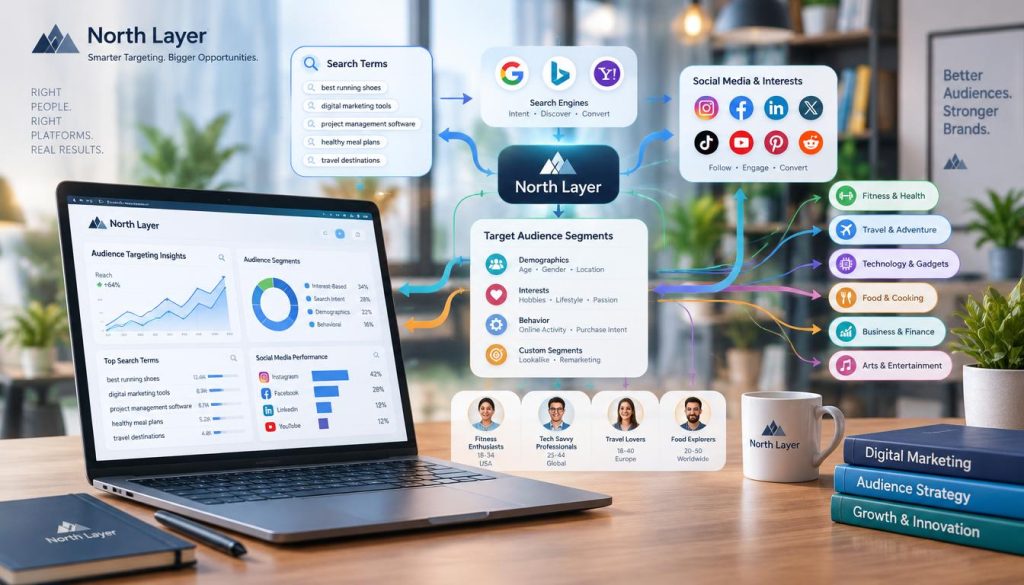
Google’s search and audience signals
Google Search can match an ad to terms a person enters. A contractor might choose phrases related to roof repair and limit campaigns to nearby service areas. Audience settings can help refine or inform who sees those ads.
Search terms do not tell the whole story. Location matters for local services, while other audience signals can add context. A business should check which searches lead to qualified calls, not assume every keyword brings a likely buyer.
Meta’s interest and behavior targeting
Meta targeting can use demographics, interests, behaviors, custom audiences, and lookalike audiences. A custom audience may include people who visited a site or engaged with a page. A lookalike audience helps find people with traits similar to an existing audience.
These options can help a business reach people who may like a product but have not searched for it. Their interest does not prove purchase intent. An audience can respond to an image without becoming a customer.
| Targeting input | Google Ads use | Facebook Ads use |
|---|---|---|
| Search terms | Match ads to relevant queries | Not the main targeting signal |
| Location and demographics | Set location and audience options | Use location and profile details |
| Interests and behaviors | Use audience signals and settings | Guide delivery by interests and activity |
| Existing customer or visitor data | Use eligible audience lists | Create custom or lookalike audiences |
Detailed targeting helps only when it reaches likely buyers. A small audience can make delivery limited, especially when several filters narrow it at once. A broad audience may give a campaign more room to find useful responses.
A business should choose the audience based on its offer and customer evidence. The next choice is the format that can explain the offer clearly.
Which Ad Formats Fit Your Offer?
A product that is easy to show can benefit from a different ad format than an urgent service people describe in a search. The message should fit the medium and the buyer’s question.
A specific product or service people already seek can suit Search or Shopping, while a strong visual offer can suit social placements. Each format needs a useful page or next step behind it.
Google’s text, product, and video placements
Google Search ads are primarily text-based. Their headlines and descriptions respond to what the person searched for. A clear service, price detail, or location can help the ad answer that need.
Shopping ads show product listings, such as an item image, name, and price. They can help a shopper compare products before visiting a store site. The product feed and landing page need accurate details.
Display placements use visual ads across websites and apps. YouTube placements use video, which can help explain a product or show how it works. These formats may reach people who are not actively searching.
Facebook’s visual placements
Facebook Ads can use images, video, carousel cards, Stories, and Reels. A carousel can show several products or steps in one ad. Short video can make a product’s size, use, or result easier to understand.
A handmade candle shop might show scent options and packaging through images. A plumbing company might use a simple local service message instead of a polished video. The format should support the customer’s real question.
Visual creative alone does not fix a weak offer or an unclear landing page. If the price, delivery terms, or booking process surprises people, an attractive ad may still lose them.
The same offer can need different formats at different points in a purchase. That choice connects to where customers are in the buying process.
Where Does Each Platform Fit in the Marketing Funnel?
A new product and an urgent repair call usually enter the customer journey at different points. Facebook Ads can create awareness, while Google Search can capture demand from people looking for a solution.
The funnel is a guide, not a rule that assigns each platform to one stage. Both platforms can support consideration and conversion with suitable campaigns and retargeting.
Introducing a problem or product
People may not know a new product exists or understand how it helps. Facebook Ads can show the product while users browse. A short demonstration can make an unfamiliar item easier to picture in daily life.
A business can also use social advertising to make a problem easier to notice. For example, a company selling indoor air filters might show common dust issues before presenting its product. The message should explain the value without making claims the company cannot support.
A search campaign can also help awareness when users search broad questions. Yet it depends on searches already happening. A brand cannot capture much search demand for a new phrase that few people know.
Helping people compare options
During consideration, a customer may compare features, providers, and prices. Search ads can answer detailed questions, while social ads can remind people about a product they viewed earlier. A useful landing page should make comparison easier.
Retargeting can reach people who visited a site or engaged with an ad, when the platform and consent settings allow it. A reminder might show delivery details or a service guarantee. It should add useful information, not repeat the same claim.
Converting people ready to act
Google Search can capture strong intent when someone looks for a nearby service. An HVAC repair search is a clear example: the person may need a technician soon. A direct call option or booking page can support that need.
Facebook Ads can also support conversion. A person who watched a product video might later see an offer and decide to buy. A social campaign can reach existing customers or visitors with a timely reminder.
These stages can be viewed as a simple working map:
- Awareness: introduce a product or brand to people who may not know it.
- Consideration: answer questions and help people compare options.
- Conversion: encourage a qualified lead, booking, or purchase.
An unfamiliar product launch may begin with discovery, while an urgent repair may begin with a search. The same customer can move between platforms before acting. The funnel helps frame that path without forcing every campaign into one role.
Campaign role matters because each click and conversion carries a cost. The next question is how those costs compare and what they mean.
What Do Google Ads and Facebook Ads Cost?
A lower CPC can make Facebook Ads look cheaper, but the click price alone does not reveal whether a campaign is profitable. Cost per conversion matters more when a business needs sales or qualified leads.
Benchmark data has no stated date, varies by industry and placement, and cannot predict an individual campaign’s bill. Treat the figures as directional, not as a current guarantee.
How Do Google Ads and Meta Ads Costs Compare?
The Google Ads vs Facebook Ads cost comparison shows a lower median CPC for Facebook Ads in the benchmark figures. The same figures show higher click-through rates for Google Ads. Each measure describes a different part of campaign activity.
| Metric | Google Ads | Facebook Ads |
|---|---|---|
| Median CPC | $2.29 | $0.49 |
| Median spend | $1,367.75 | $1,025.67 |
| CTR | 4.26% | 1.81% |
Median ad spend was $1,367.75 for Google Ads and $1,025.67 for Facebook Ads. Median CTR, or click-through rate, was 4.26% and 1.81%, respectively. These figures do not say how much a particular business should spend.
The Google Ads vs Meta Ads cost figures also vary by market. The US medians are higher than the Canadian and UK medians shown here.
| Market | Google Ads median CPC | Facebook Ads median CPC |
|---|---|---|
| United States | $2.84 | $0.52 |
| Canada | $2.02 | $0.45 |
| United Kingdom | $1.07 | $0.29 |
Industry changes click prices, too. The selected median CPC for legal services is $5.73 on Google Ads and $0.75 on Facebook Ads. For apparel, the selected medians are $0.72 on Google Ads and $0.46 on Facebook Ads.
Those numbers show why a single average can mislead. A legal firm and a clothing shop compete for different searches and audiences. Placement, location, and campaign choices also affect what an advertiser pays.
Why Cost per Conversion Matters More Than CPC
A cheaper click can still cost more per customer if few visitors take action. A higher CPC may be reasonable when the campaign attracts qualified leads that turn into valuable sales.
For example, a service company might pay for several clicks before one visitor calls. A store might get many social clicks but few purchases. Each owner needs to connect spend with completed business goals, such as a qualified lead or sale.
Benchmarks help set expectations, but they cannot predict the result for an individual campaign. The offer, page, location, and competition all affect the bill. The next step is to compare sales and conversion measures, not just click prices.
How Should You Compare Performance and ROI?
The better-performing platform is the one that creates valuable customers at a cost the business can sustain. Clicks alone are not a result; a business needs to know what those clicks produce.
Compare cost per lead or sale, conversion quality, revenue, and customer lifetime value. Those measures show more than traffic volume or a low CPC.
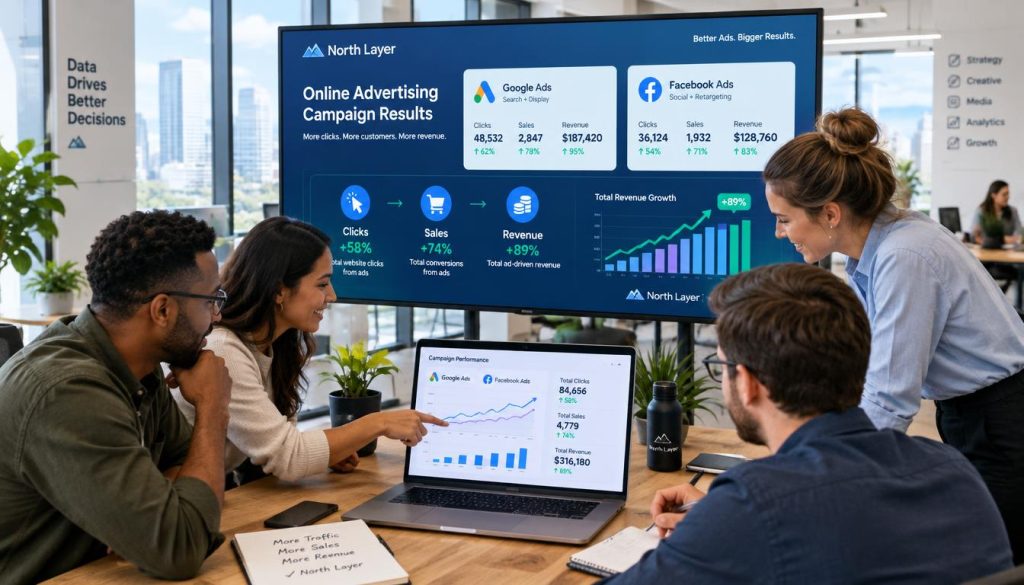
How Facebook Ads vs Google Ads Performance Varies by Goal
Google Ads can produce more immediate conversions when search intent is strong. A person seeking a nearby locksmith may be ready to call. A search campaign can meet that demand when its message and service area match.
Facebook Ads may need follow-up and nurturing, but it can support later sales. Someone who watches a product demo may buy after seeing a reminder or reading more details. That delay does not mean the first ad had no value.
Facebook Ads vs Google Ads performance depends on the goal and the path to purchase. A business seeking phone calls may judge a campaign by qualified calls. An online store may care more about completed orders and revenue.
Track value, not just clicks
Conversion quality matters as much as the count. A campaign might create many form fills, but some leads may be outside the service area or unable to buy. The owner should review which leads become customers.
Customer lifetime value can help a business understand the longer-term value of a new customer. A first purchase may be small, while repeat orders add more revenue over time. The estimate should reflect the business’s real sales history.
Attribution can also change the picture. If only the final click receives credit, earlier assisted conversions may be missed. A social ad might introduce the brand before a person later searches and buys.
Compare results over a period that fits the sales cycle, not just one day. A campaign for a quick repair may show leads sooner than a considered business purchase. Apply the same value standard to different business models and buying patterns.
Which Platform Fits Your Business Model?
A local plumber, an online clothing shop, and a specialist software firm face different paths to a customer. The business model shapes the starting point, but customer behavior matters more than the label.
Choose based on whether buyers search, need to see the offer, and take time to decide. One platform can lead, while another supports the sale.
Local services with urgent demand
Local services often benefit from Google Search when customers need help immediately. A person with a broken furnace may search for repair nearby. Location settings and a clear call option can help turn that intent into a service request.
Social ads can still help a local business stay familiar or reach people who have shown interest. Yet broad awareness may not replace a search for same-day work. The campaign role should match how quickly the customer needs help.
Ecommerce and visual products
Ecommerce businesses can use Facebook Ads for discovery, especially when products are easy to show. A clothing shop can present a new collection through images or short videos. Google Shopping or Search can reach people actively comparing a product.
A product with clear features may benefit from both routes. Social can introduce the style, while Shopping listings can meet people searching for that type of item. Product details and stock information need to stay accurate.
B2B and considered purchases
B2B businesses can use search for high-intent leads, such as people seeking a specific software tool. Social can support awareness or retargeting while buyers compare options. A longer sales cycle may mean results take time to show.
B2B and B2C labels alone do not decide platform fit. Some consumer products need explanation, while some business services have clear search demand. The buyer’s behavior and the offer give better clues.
| Business situation | Likely starting platform | Why | Useful supporting role |
|---|---|---|---|
| Local urgent service | Google Ads | Customers search for quick help | Facebook Ads for local awareness |
| Visual ecommerce product | Facebook Ads | Images can introduce the product | Google Shopping or Search for active buyers |
| B2B or considered purchase | Google Ads | Search can capture specific need | Facebook Ads for awareness or retargeting |
Before choosing, a small business can check three things:
- Do customers search for the product or service?
- Is the offer visual, unfamiliar, or hard to explain?
- How long does the buying decision usually take?
The answers point toward a first test, not a permanent choice. Different paths can make a coordinated approach more useful than a strict either-or plan.
When Should a Business Use Both Platforms?
A social ad can introduce a business before a customer is ready to search for it. Using both can connect discovery with later intent, when the budget and measurement plan can support two campaigns.
A practical sequence lets Facebook Ads introduce an offer, then Google Ads capture later searches or branded demand. Each campaign should support the same customer promise.
Let Facebook Ads introduce the offer
A social campaign can show a product or service to people likely to care about it. If people watch a video or visit the site, a business may retarget them with useful follow-up. That message can answer a common question or explain the next step.
Repeated exposure should add value rather than show the same ad endlessly. A second message might explain a product feature, while another could share booking details. The business should keep the offer clear across both ads.
Let Google Ads capture later intent
After seeing a social ad, a person may search the brand name or a related service. Google Ads can help the business appear for those searches. Search ads can also reach people who discover the need through another route.
Consistent wording and offers help customers recognize the business across platforms. If a social ad promises a free estimate, the search page should explain how to request one. A mismatch can weaken trust and waste visits.
Running both is not automatically better. A budget that is too small may not gather useful results across two platforms. A business also needs conversion tracking to judge whether either campaign leads to action.
Use a second platform when it has a clear role and the business can measure it. The next decision depends on the evidence each campaign provides.
What Should a Small Business Track?
A campaign report should connect ad spend to an action that matters to the business. Useful tracking follows the full step from click to lead, sale, or revenue.
Check conversion tracking, landing-page behavior, UTM tags, and cross-channel assisted conversions. These checks help explain what a campaign did beyond bringing visitors.
Conversion and revenue measures
Google Ads and Google Analytics are different tools. Ads manages and reports paid campaigns, while Analytics measures activity on a website or app. Connected conversion events can help show whether campaigns lead to useful outcomes.
| Measure | What it tells the owner | What to check |
|---|---|---|
| CPC | Amount paid for a click | Compare with lead or sale value |
| Conversion rate | Share of visitors who act | Confirm the action is tracked |
| Cost per lead or sale | Spend for each result | Review lead quality or order value |
| Revenue or ROAS | Sales value tied to ad spend | Check revenue values and attribution |
Return on ad spend, or ROAS, compares revenue attributed to ads with the ad cost. It can help online stores review revenue, but service businesses may need to judge qualified leads first. A form submission is not the same as a paying customer.
Tracking limits and useful checks
Conversion events need clear names and working settings. A business might track a booked appointment separately from a page view. That distinction keeps reports from treating every visit as a business result.
Landing-page behavior can reveal where visitors stop. If many people leave before reaching a form, the page may be slow or unclear. UTM tags can label campaign links so website reports show where visits began.
Privacy changes, including iOS and cookie restrictions, can limit direct attribution. Modeled conversions and GA4 event data may help fill gaps, with appropriate consent settings. Neither removes all uncertainty about which ad caused a sale.
Cross-channel assisted conversions matter when customers see more than one campaign. A report that credits only the last click may miss an earlier social ad. These Google Ads tracking and structure tips can help owners review campaign results beyond clicks.
Tracking is useful only when the business checks it and acts on what it shows. These measures can also reveal common sources of wasted spend before adding budget.
What Causes Wasted Spend on Each Platform?
An ad budget can disappear quickly when campaign settings and the customer’s next step do not match. Small mismatches can add up, especially when clicks continue without useful conversions.
Check relevance, location, tracking, creative, and the landing page before raising spend. A campaign can attract attention and still miss the right customer.
Common Google Ads waste
Google Ads waste can come from poorly chosen keywords. A broad term may bring searches for information rather than a service. Search-term reports can show whether the actual queries match the offer.
Weak location settings can show ads outside the area a business serves. Irrelevant clicks can also come from broad searches, while broken conversion tracking hides which visits lead to action. The owner may then keep funding a weak campaign.
Invalid clicks can occur in some industries. They are not inevitable, but unusual click patterns deserve review. A business should check its account reporting and protect its budget with careful campaign oversight.
Common Facebook Ads waste
Facebook Ads can waste spend when creative repeats too often or the offer is unclear. Ad fatigue can reduce response when people see the same creative too often. Fresh images or a changed message may help, but the offer still needs to make sense.
Overly narrow audiences can limit delivery and reduce the system’s room to find likely buyers. Weak follow-up can waste interest after someone visits a site or asks a question. A useful ad needs a clear next step and timely response.
Across either platform, the landing page should match the ad. A discount ad should show the same terms on the page. A call ad should make the phone number easy to find.
Before changing bids or adding spend, review these checks:
- Search-term relevance and negative keywords.
- Location settings and service area.
- Working conversion events and tracking.
- Creative freshness and audience response.
- Landing-page match with the ad’s promise.
One weak setting does not always explain a poor result. Compare the report with real calls, orders, and lead quality. Then turn the diagnosis into a simple test plan for a limited budget.
How Can You Choose a First Campaign With a Limited Budget?
The safest first campaign is narrow enough to measure and small enough that a weak result will not harm the business. A focused test limits risk while giving the owner a clear question to answer.
Choose one business goal, set an affordable test budget, and track the action before launch. Do not judge success by clicks alone.
A practical first-test checklist
A small business can use this checklist before starting:
- Choose one business goal, such as calls or online sales.
- Confirm that the audience and offer fit the platform.
- Set a test budget the business can afford to lose.
- Install conversion tracking and test that it records actions.
- Review lead quality before scaling the campaign.
A narrow test might focus on one service area or one product group. That makes results easier to interpret than changing several offers and audiences at once. The business should decide in advance what a useful lead looks like.
Is $10 a day enough for Google Ads? It can test a narrow campaign, but it may produce too little data for a reliable conversion judgment. The outcome depends on CPC, competition, and conversion volume.
What Should a Google Ads and Meta Ads Course Cover?
A Google Ads and Meta Ads course should teach campaign setup, audience or keyword choices, measurement, testing, and budget controls. It should explain how to read reports and change a campaign based on evidence.
A course should not promise guaranteed results. Business goals, offer quality, competition, and customer demand all affect outcomes. Learning how to test and measure is more useful than copying another company’s settings.
North Layer works with small business owners to make marketing clearer and reduce wasted spend. A practical test gives that partnership a useful starting point: one goal, one measure, and honest results.
A first campaign should answer one clear business question without putting the rest of the budget at risk.
Choose one measurable goal and review the result before expanding spend. That gives the business a clear next step instead of a guess.
Conclusion
The right platform is the one that fits how customers discover the offer and what the business needs next. Start with Google Ads when people actively search for a clearly defined need.
Start with Facebook Ads when discovery, visual storytelling, or awareness matters more. The business can add the other platform later if its role is clear and results support the added spend.
Before spending, write down one campaign goal and one conversion measure. Choose one measurable goal, review the results, and only then expand the budget.
FAQ
Is Google Ads different than Google Analytics?
Which is better, FB Ads or Google Ads?
Is it worth it to do Google Ads?
Is a day enough for Google Ads?
Are Google Ads still worth it in 2026?
Why did Google Ads charge me 0?
Is FAQ
Is Google Ads different than Google Analytics?
Yes. Google Ads manages paid campaigns, while Google Analytics measures activity on a website or app. Conversion tracking connects relevant actions, such as a purchase or appointment request, to campaign activity. The tools can share data when set up and connected correctly. They answer different questions, so a business should not treat an ad click as a completed conversion.
Which is better, FB Ads or Google Ads?
Google Ads often fits products or services that people actively search for, while Facebook Ads may suit visual discovery and awareness. The better choice depends on customer behavior, the offer, and the business goal. An emergency repair company may start with search ads. A business launching an unfamiliar product may first need social ads to explain what it offers.
Is it worth it to do Google Ads?
Google Ads can be worthwhile when relevant searches exist and a lead or sale can cover advertising and operating costs. A business should make sure it can track conversions before scaling. It should also review whether searchers match its service area and offer. If the campaign brings clicks but no qualified actions, the owner should check the keywords, ad message, and landing page.
Is $10 a day enough for Google Ads?
$10 a day can support a narrow test, but it may not create enough data for a reliable conversion judgment. The number of clicks depends on CPC and competition, while conversions also depend on the offer and page. A business can use a small test to check relevance and tracking. It should avoid treating a few early clicks as proof of long-term results.
Are Google Ads still worth it in 2026?
Google Ads can be worth using in 2026 when current demand, margins, tracking, and cost per qualified conversion support the business goal. The year alone does not determine value. Search behavior and competition can change by industry and location. A business should review recent campaign data, confirm its conversion tracking works, and compare qualified leads or sales with its costs.
Why did Google Ads charge me $500?
A $500 charge may reflect accumulated ad spend, a billing threshold, taxes, or billing adjustments. There is no single universal threshold that explains every account charge. Check the billing activity and payment settings in the account to see the charge period and related costs. If the charge does not match the account records, contact Google Ads support through the account’s billing help options.
Is $1 a day good for Google Ads?
$1 a day may help someone learn the interface or run a very limited test, but it is unlikely to provide dependable conversion evidence for many campaigns. The budget may buy few clicks, especially in competitive areas. A business can still use it to check whether an ad is approved or a link works. It should not expect a small test to prove whether the full strategy can succeed.
a day good for Google Ads?
Is Google Ads different than Google Analytics?
Yes. Google Ads manages paid campaigns, while Google Analytics measures activity on a website or app. Conversion tracking connects relevant actions, such as a purchase or appointment request, to campaign activity. The tools can share data when set up and connected correctly. They answer different questions, so a business should not treat an ad click as a completed conversion.
Which is better, FB Ads or Google Ads?
Google Ads often fits products or services that people actively search for, while Facebook Ads may suit visual discovery and awareness. The better choice depends on customer behavior, the offer, and the business goal. An emergency repair company may start with search ads. A business launching an unfamiliar product may first need social ads to explain what it offers.
Is it worth it to do Google Ads?
Google Ads can be worthwhile when relevant searches exist and a lead or sale can cover advertising and operating costs. A business should make sure it can track conversions before scaling. It should also review whether searchers match its service area and offer. If the campaign brings clicks but no qualified actions, the owner should check the keywords, ad message, and landing page.
Is $10 a day enough for Google Ads?
$10 a day can support a narrow test, but it may not create enough data for a reliable conversion judgment. The number of clicks depends on CPC and competition, while conversions also depend on the offer and page. A business can use a small test to check relevance and tracking. It should avoid treating a few early clicks as proof of long-term results.
Are Google Ads still worth it in 2026?
Google Ads can be worth using in 2026 when current demand, margins, tracking, and cost per qualified conversion support the business goal. The year alone does not determine value. Search behavior and competition can change by industry and location. A business should review recent campaign data, confirm its conversion tracking works, and compare qualified leads or sales with its costs.
Why did Google Ads charge me $500?
A $500 charge may reflect accumulated ad spend, a billing threshold, taxes, or billing adjustments. There is no single universal threshold that explains every account charge. Check the billing activity and payment settings in the account to see the charge period and related costs. If the charge does not match the account records, contact Google Ads support through the account’s billing help options.
Is $1 a day good for Google Ads?
$1 a day may help someone learn the interface or run a very limited test, but it is unlikely to provide dependable conversion evidence for many campaigns. The budget may buy few clicks, especially in competitive areas. A business can still use it to check whether an ad is approved or a link works. It should not expect a small test to prove whether the full strategy can succeed.
FAQ
Is Google Ads different than Google Analytics?
Yes. Google Ads manages paid campaigns, while Google Analytics measures activity on a website or app. Conversion tracking connects relevant actions, such as a purchase or appointment request, to campaign activity. The tools can share data when set up and connected correctly. They answer different questions, so a business should not treat an ad click as a completed conversion.
Which is better, FB Ads or Google Ads?
Google Ads often fits products or services that people actively search for, while Facebook Ads may suit visual discovery and awareness. The better choice depends on customer behavior, the offer, and the business goal. An emergency repair company may start with search ads. A business launching an unfamiliar product may first need social ads to explain what it offers.
Is it worth it to do Google Ads?
Google Ads can be worthwhile when relevant searches exist and a lead or sale can cover advertising and operating costs. A business should make sure it can track conversions before scaling. It should also review whether searchers match its service area and offer. If the campaign brings clicks but no qualified actions, the owner should check the keywords, ad message, and landing page.
Is $10 a day enough for Google Ads?
$10 a day can support a narrow test, but it may not create enough data for a reliable conversion judgment. The number of clicks depends on CPC and competition, while conversions also depend on the offer and page. A business can use a small test to check relevance and tracking. It should avoid treating a few early clicks as proof of long-term results.
Are Google Ads still worth it in 2026?
Google Ads can be worth using in 2026 when current demand, margins, tracking, and cost per qualified conversion support the business goal. The year alone does not determine value. Search behavior and competition can change by industry and location. A business should review recent campaign data, confirm its conversion tracking works, and compare qualified leads or sales with its costs.
Why did Google Ads charge me $500?
A $500 charge may reflect accumulated ad spend, a billing threshold, taxes, or billing adjustments. There is no single universal threshold that explains every account charge. Check the billing activity and payment settings in the account to see the charge period and related costs. If the charge does not match the account records, contact Google Ads support through the account’s billing help options.
Is $1 a day good for Google Ads?
$1 a day may help someone learn the interface or run a very limited test, but it is unlikely to provide dependable conversion evidence for many campaigns. The budget may buy few clicks, especially in competitive areas. A business can still use it to check whether an ad is approved or a link works. It should not expect a small test to prove whether the full strategy can succeed.