

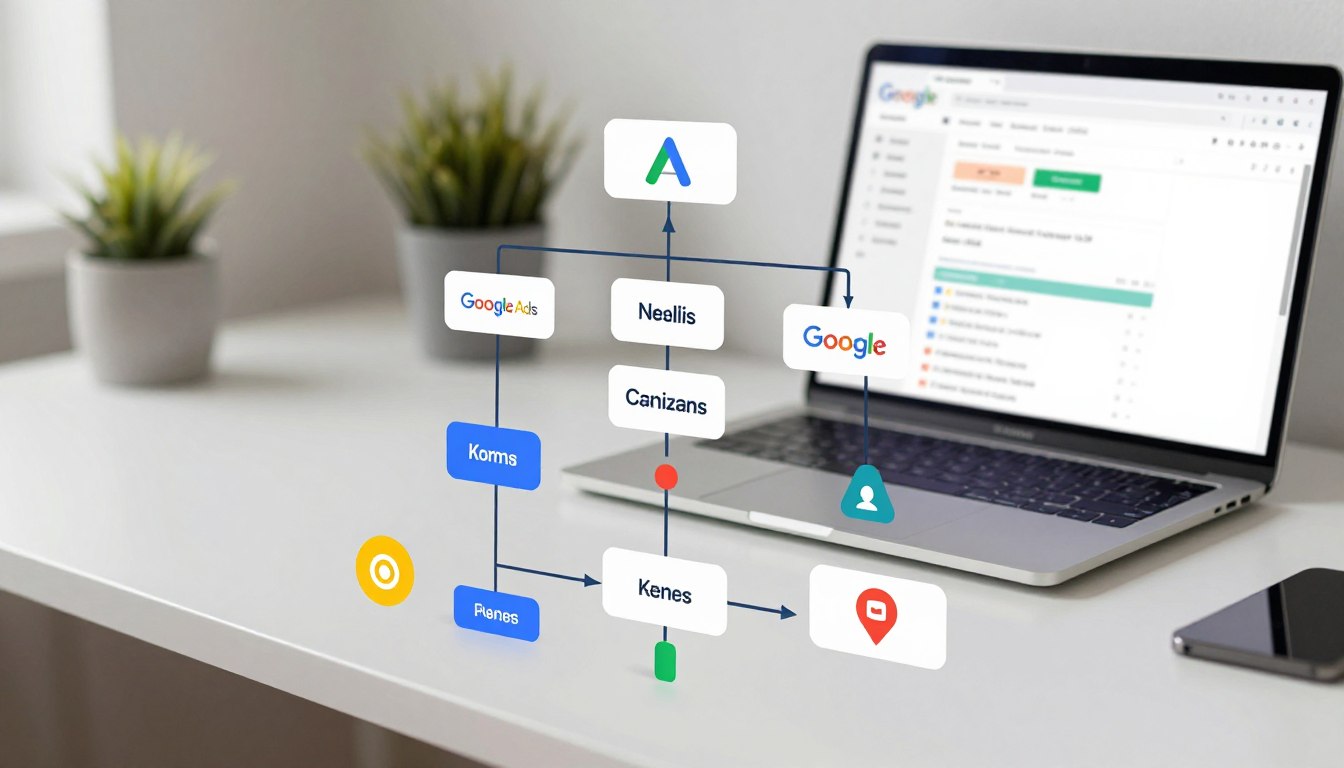
Many small business owners want to spend more on marketing when they see a few clicks. But, rushing to spend more without a solid Google Ads campaign structure can waste resources. A strong foundation protects your money.
Good campaign setup is more than picking keywords. It’s about making sure your account matches your business goals. By focusing on performance tracking, you look at what really matters: real leads and revenue.
We think growth should be precise, not just about volume. By learning campaign optimization early, you check your data before growing. This way, you can expand your reach while keeping profits high.
Key Takeaways
- Establish a solid foundation before increasing your marketing spend.
- Focus on qualified leads and revenue, not just clicks.
- Use accurate data to validate your marketing efforts.
- Prioritize long-term profitability over quick, high-volume results.
- Scale your efforts gradually to minimize financial risk.
Understanding Google Ads Campaign Structure
Your account structure is like a blueprint for your ads. A good Google Ads campaign structure helps you manage your budget well. It also makes it easier to find out why some ads don’t work.
Instead of listing every product or service, focus on your main business goals. This makes your setup more focused and effective.
Importance of Campaign Structure
A well-organized account lets you test what really brings in money. With a clear campaign setup, you can see which parts of your business are most profitable. This helps you avoid wasting money and grow what’s working.
Good ad group organization keeps your ads relevant to what users search for. Grouping related keywords together makes your ads more connected to what users want. This leads to better quality scores and lower costs.
Components of a Campaign
Every campaign has different parts that work together. Knowing how these parts fit is key to controlling your ad spend.
- Campaigns: These are the main containers where you set budgets and target areas.
- Ad Groups: These are sub-containers for your keywords and ads.
- Ads and Landing Pages: These are where you turn visitors into customers.
Campaign Types Overview
Google has many campaign types for different goals. You can choose based on whether you want to grab immediate interest or build your brand.
| Campaign Type | Primary Goal | Best For |
|---|---|---|
| Search | Capture Intent | High-intent text ads |
| Display | Brand Awareness | Visual banner ads |
| Shopping | Product Sales | E-commerce listings |
| Performance Max | Conversion Growth | Cross-channel automation |
Key Elements of a Successful Google Ads Campaign
Success in digital advertising starts long before you write your first ad headline. A thoughtful campaign setup acts as the blueprint for your entire account. It ensures that every dollar spent works toward a specific business outcome.
Setting Clear Objectives
Before launching, define exactly what success looks like for your business. Whether you want to drive website traffic, generate phone calls, or increase online sales, your goals dictate your account structure.
Clear objectives allow you to measure progress accurately. Without them, it becomes difficult to determine if your ads are actually contributing to your bottom line or simply consuming your resources.
Identifying Your Target Audience
Effective keyword targeting requires a deep understanding of who your customers are and what they need. You must align your ads with the specific problems your audience is trying to solve.
Consider the intent behind the searches you choose to target. Are your customers ready to buy, or are they just researching? Tailoring your approach to these different stages helps you reach the right people at the right time.
Budget Considerations
Your budget allocation should be directly tied to the value of a new customer. It is helpful to calculate your acceptable acquisition cost before setting your daily limits.
Keep in mind that industry benchmarks vary significantly. For instance, legal services often see higher costs per click compared to the fitness industry. But these costs reflect the lifetime value of a client.
Your bidding strategy must also account for search volume limitations. Even with a large budget, you cannot spend money if there are not enough people searching for your specific services. Focus on quality over quantity to ensure your investment remains sustainable.
Organizing Your Campaigns for Success
Having a well-organized account is key to reaching the right people at the right time. A clean Google Ads campaign structure is the foundation of your digital marketing. It helps you control your message and budget. This makes it easier to make quick, informed decisions that boost your return on investment.
Structuring Ad Groups
Effective ad group organization means grouping similar keywords together. This ensures your ads are relevant to what users are searching for. Keeping your ad groups focused helps maintain a high quality score and saves money.
It’s smart to separate your services, locations, or products into different groups. This prevents your ads from being too broad. Segmenting your account this way makes it easier for users to find what they’re looking for.
Utilizing Keywords Effectively
Good keyword targeting balances reach and intent. You need to know the difference between broad searches and those with commercial intent. Matching your keywords to your audience’s needs improves your ad copy optimization.
- Broad keywords: Good for building awareness but need careful watch.
- Specific keywords: Ideal for users ready to buy.
- Commercial-intent keywords: These high-value terms should get more of your budget.
Ad Formats to Consider
Choosing the right ad format is as important as your keyword strategy. Your campaign setup should focus on formats that fit the user’s device and intent. Whether it’s responsive search ads or image-based ads, aim for a smooth experience that drives clicks.
| Strategy | Primary Benefit | Best For |
|---|---|---|
| Simple Structure | Easy Management | Small Budgets |
| Segmented Groups | Higher Relevance | Diverse Services |
| Targeted Keywords | Better ROI | High-Intent Leads |
The Role of Keywords in Your Campaign
Your choice of search terms connects your business with possible customers. Good keyword targeting makes sure your ads show up when people are looking for what you offer.
Types of Keywords
Knowing the types of search terms helps you control who sees your ads. Broad match terms reach the most people. But, phrase and exact match terms are more precise for specific searches.
It’s also key to know the difference between branded and non-branded terms. Branded keywords catch users who already know your company. Non-branded terms help you find new customers looking for general services.
Long-tail keywords are super valuable for small businesses. These detailed, multi-word phrases show a higher buying intent and have less competition than short, generic terms.
“The secret to successful advertising is not just reaching more people, but reaching the right people at the exact moment they are ready to buy.”
Negative Keywords: Why They Matter
Negative keywords are key for campaign optimization. They help you avoid spending on clicks that don’t match your products or services.
Checking your search-term reports often helps you find terms that don’t fit. Adding them to your negative list keeps your budget on track for quality leads.
Keyword Research Tools
Before adding new terms, use professional research tools to check their value. These tools give you data on search volume, competition, and local demand to help you decide.
It’s as important to analyze the intent behind a term as its volume. A tool might show a term has a lot of traffic, but if it doesn’t lead to sales, it might not be worth it. Regular keyword targeting and campaign optimization are vital for growth.
Crafting Compelling Ad Copy
Your ad copy is the key to connecting what users search for with your business. When your message hits the mark, you guide them smoothly to your site. This is the heart of ad copy optimization.
Focus on being clear and direct. This way, every click is a valuable lead. It not only brings in traffic but also builds trust before they even visit your page.
The Importance of Relevance
Relevance is key to a thriving Google Ads account. Ads that match search queries well get a higher Quality Score. This can lower costs and boost ad position.
When your ad and landing page match, users are more likely to stay. This cohesion lowers bounce rates and shows search engines your content is valuable. Keeping relevance high is vital for campaign optimization in the long run.
Best Practices for Writing Ad Copy
Start with clear, benefit-driven headlines. Instead of just listing your company name, focus on the problem you solve for customers.
Use a strong, credible call to action. Tell users what to do next. Use the same language as the search query to show you’re the right fit. Specificity wins because it removes doubt for buyers.
Testing Variations for Success
Never think your first draft is the best. Testing different versions helps you find what works best.
Don’t change too many things at once. If you change headlines, descriptions, and landing pages all at once, you won’t know what helped. Test one thing at a time to get actionable data for your next steps.
Tracking and Measuring Your Campaign Performance
You can’t improve what you don’t measure. Data analysis is key to any successful campaign. It helps you see how your Google Ads campaign structure adds value to your business. Without this insight, your budget might be wasted on ineffective tactics.

Key Performance Metrics to Monitor
To know if your ads work, look at more than just numbers. Focus on metrics that affect your profits and business health.
- Click-Through Rate (CTR): Shows how well your ads match what your audience wants.
- Conversion Rate: Tells you how many visitors do what you want them to, like buying or signing up.
- Cost Per Acquisition (CPA): Reveals the average cost of getting a new customer or lead.
- Return on Ad Spend (ROAS): Shows how much money you make for every dollar spent on ads.
Using Google Analytics with Ads
Linking your Google Ads to Google Analytics gives you a deeper look at user actions. This lets you see what happens after someone clicks your ad and visits your site. You can track goals like form submissions or product views to find out which campaigns are most valuable.
Setting up your conversion tracking right is key for accurate reports. Make sure every lead is counted. This way, you can see how your ads lead to website actions, helping you improve your strategy.
Adjusting Strategies Based on Data
Good campaign optimization takes time and focuses on long-term trends. Don’t change everything based on one day’s results. Daily changes are normal in digital ads. Look for patterns over a week or month to see if your bidding strategy is working.
If your data shows some keywords or ads aren’t doing well, adjust. Small, data-driven changes can lead to better results than quick, impulsive ones. By regularly analyzing your data, your ads will stay effective and profitable.
Scaling Your Google Ads Campaign
Growing your ads needs a solid plan that values stability over speed. Before you boost your spending, make sure your Google Ads campaign structure is strong. We suggest a “Fix, Validate, Scale” method for sustainable growth.
Recognizing When to Scale
Scaling means more than just spending more money. It’s about knowing when your campaign is ready for more traffic. First, check if your search terms are relevant. If your impression share is high and conversion tracking is accurate, you’re on the right track.
Look at your conversion rate and lead quality before scaling. If they’re stable, you’re ready to grow. Scaling a campaign with problems will only waste your budget.
Strategies for Expanding Your Reach
When you’re ready to grow, make small changes first. Start by tweaking your bidding strategy to see how it handles higher targets. This keeps you in control while exploring new visibility chances.
Also, look for new keywords that match your top ads. Regular campaign optimization keeps your growth profitable. Slow growth protects your account from sudden drops.
Budget Management During Scaling
Effective budget allocation is key when scaling. Don’t suddenly double your spend, as it can upset your ads’ learning phase. Instead, raise your budget by small amounts each week.
Keep a close eye on your CPA as you spend more. If costs go up without more revenue, stop scaling and check your settings. Steady, data-driven growth is the best way to scale your business.
Leveraging Automation in Google Ads
Today’s advertising tools make managing your ads easier. They use machine learning to analyze data quickly. This lets you focus on big ideas while the system handles the details.
Benefits of Automated Campaigns
Automation is a big plus. It quickly processes data like device and location. This improves your overall efficiency, helping you reach customers when they’re most likely to buy.
Using the 70-20-10 framework is smart. It means 70% for proven campaigns, 20% for new ideas, and 10% for experiments. This keeps you stable while exploring new growth paths.
Setting Up Smart Bidding
Smart Bidding adjusts your bidding strategy automatically. It looks at many data points to set the right price for each auction. This keeps your budget allocation focused on the best leads.
Always check your conversion quality before automating your spend. It’s key to make sure leads are actually converting into business. Human oversight is vital to ensure the machine meets your goals.
Understanding Automated Reporting
Good performance tracking is key to success. Automated reporting tools give you clear insights into your ad performance. They save time by pointing out trends you might miss.
Regularly reviewing these metrics helps you make smart budget decisions. While automation does the hard work, you need to understand the data. This ensures your bidding strategy aligns with your revenue goals.
Using Remarketing Strategies Effectively
Turning casual visitors into loyal customers takes more than one visit. Many people check out your website and products but don’t buy. Remarketing helps keep them thinking of you and brings them back for campaign optimization.
What is Remarketing?
Remarketing shows ads to users who’ve shown interest in your business before. You target those who have already shown interest, not a wide audience. This builds brand familiarity and nudges users to take the next step.

Identifying Your Remarketing Audience
To get the best results, segment your audience lists by specific behaviors. This way, you can send the right message at the right time. Group your audience based on:
- Specific pages visited: Target users who viewed your pricing or service pages.
- Product interest: Show ads for items that a user added to their cart but did not purchase.
- Lead status: Create separate lists for new visitors versus returning customers.
- Time of last interaction: Focus on users who visited recently to keep your brand fresh.
Creating Targeted Remarketing Ads
Effective ads don’t just repeat the same message. They address specific concerns or offer valuable incentives to move forward. You might offer a discount, share a testimonial, or highlight a unique benefit.
Proper campaign optimization also means managing frequency and exclusions. You want your ads to be helpful, not annoying. By excluding users who’ve already bought, you save budget and focus on those who need a nudge.
Common Mistakes to Avoid
Many small business owners make simple mistakes that hurt their success. Even with a good budget, campaign optimization can fail if you fall into common traps. Spotting these errors early helps you change course and protect your marketing investment.
Overcomplicating Campaign Structures
It’s tempting to make a unique campaign for every product or service. But, having too many small campaigns can dilute your data. This makes Google’s algorithms struggle to make smart bidding decisions.
A complex structure also makes it hard to compare performance. Keep your setup simple to focus on campaign optimization and data-driven results. Simplicity leads to faster learning and better results.
Ignoring Mobile Optimization
Most people use smartphones to interact with ads. If your landing page isn’t mobile-friendly, you’ll lose customers before they see your offer. Slow load times and complex navigation hurt mobile conversion.
Make sure your site has clear, clickable contact buttons and adjusts well to smaller screens. A smooth mobile experience is key for campaign optimization. If users have to zoom in to read, they’ll leave your site fast.
Underestimating Quality Scores
Your Quality Score shows how relevant your ads are to searchers. Ignoring this metric means you pay more for each click. Bad ad copy or landing pages that don’t match user intent will lower your score.
Work on connecting your keywords, ad text, and landing page content. Improving this alignment boosts your campaign optimization and lowers costs. High relevance tells Google your business adds value to users.
| Common Mistake | Primary Impact | Recommended Fix |
|---|---|---|
| Over-segmentation | Data dilution | Consolidate ad groups |
| Slow mobile site | High bounce rate | Improve page speed |
| Low relevance | High cost per click | Refine ad messaging |
Staying Updated with Google Ads Changes
Keeping your Google Ads strategy sharp is not just about setting it up. It’s about keeping up with changes. The platform changes fast, and knowing these changes is key for campaign optimization. New features can help, but you should use them wisely to protect your budget.
Importance of Ongoing Education
Google often updates its tools and policies. If you don’t keep up, your account might not perform well. Continuous education helps you know what updates are useful and what’s not.
“Success in digital marketing is not about knowing everything, but about being willing to learn and adapt as the landscape changes.”
Before using new features on a big scale, test them first. Tasks like checking search terms and updating keywords are key. These tasks help your campaigns succeed, no matter how Google changes.
Resources for Staying Informed
You don’t have to read everything to stay up-to-date. Choose a few reliable sources for clear, useful info. Here’s a table of the best ways to keep informed.
| Resource Type | Best For | Frequency |
|---|---|---|
| Google Ads Help Center | Policy and feature updates | As needed |
| Official Google Blog | Major platform announcements | Monthly |
| Industry News Sites | Strategic trends and tips | Weekly |
Joining Advertising Communities
Connecting with others can give you new ideas for campaign optimization. Many forums and groups let you ask questions and share experiences. These communities can help you avoid common mistakes.
Being part of these groups makes you feel less alone in your marketing. Always check advice against official sources to make sure it fits your business goals. By staying informed and choosing wisely, you can stay ahead without getting overwhelmed.
Conclusion
Building a profitable digital presence takes time and focus. A good Google Ads campaign structure is key. It’s the base for every dollar you spend on growing your business.
Core Pillars for Long-Term Results
Success comes from clear goals, focused ad groups, and the right keywords. Keeping an eye on how your ads perform helps you see what works. Think of your account as a living thing that needs care, not just a setup.
Budgeting and Scaling with Confidence
Small businesses often spend $1,000 to $10,000 a month to meet their goals. Your budget depends on your industry, local competition, and customer value. Start small to test your messages before spending more.
The Path to Sustainable Improvement
Optimizing your campaigns helps cut down on wasted clicks and boosts your return on investment. See every change as a chance to learn and get better. By making decisions based on data, you save resources and build a system that grows with your business.



