


Nearly 46% of all clicks go to the top three search results. That number shows why any business must be found where people look first.
This guide proves that mastering SEO for small businesses does not need to be complex. We strip the process down to clear steps. We focus on search engines and the practical moves that drive traffic to your website.
Start with a few high-impact changes. Use keyword research, tidy meta tags, faster page speed, and helpful content. Link building and local listings like google business and google maps matter too.
We will show actionable tips that save time and money. The goal is steady growth in visitors and customers without guesswork. Trust a simple, repeatable seo strategy that fits a busy owner’s schedule.
Key Takeaways
- Top search results capture most clicks; visibility drives traffic.
- Focus on a few practical steps: keywords, meta, speed, and local listings.
- Clear content and page structure make your website easier to find.
- Local tools like google business and google maps boost local search.
- Small, steady improvements often beat big, costly overhauls.
Understanding the Value of SEO for Small Businesses
Showing up in the right searches makes a website work like a round‑the‑clock salesperson. With over 9.5 million searches per minute on google, there is constant opportunity to be discovered.
Investing in seo is one of the most cost‑effective ways to generate leads 24/7. Unlike paid ads, results keep working after the spend stops. That long tail of traffic builds brand trust and steady customers.
A well‑optimized site improves user experience across pages. Better navigation and helpful content keep visitors on the site longer. That signals value to search engines and boosts visibility in search results.
- Cost efficiency: organic traffic reduces reliance on ads.
- Authority: consistent presence on google creates trust.
- Longevity: targeted keywords deliver ongoing leads.
- Local reach: listing on google business captures nearby customers.
We guide owners through simple steps. The goal is practical improvements that bring measurable visitors and revenue over time.
Core Components of a Successful SEO Strategy
Start by making the site easy to crawl and fast to load, then give people clear answers.
Technical SEO Foundations
Make the site crawlable. That lets search engines find and index important pages. Check sitemaps, robots settings, and canonical tags.
Improve speed and structure. Fast pages reduce bounce and help rankings. Organize navigation so engines and users reach services quickly.

Content Quality and Relevance
Content must solve real problems. High-quality pages answer questions and build trust with customers.
- Target clear keywords and intent.
- Keep content focused on your niche and services.
- Monitor indexed pages so your best work appears in search results.
Link quality matters. Links from reputable sites act as votes of confidence and help a business gain authority.
Conducting Technical and Content Audits
A focused audit quickly reveals the hidden issues that slow a website and drive traffic away.
Technical checks track page speed, broken links, and redirect chains. These items stop search engines from crawling important pages. Fixing them improves site health and keeps information accurate.
Content review shows which pages bring traffic and which need updates. Review meta descriptions and keywords to improve click rates. Identify content gaps and plan new pages that answer real customer questions.
We recommend an annual audit. Regular reviews show where a small business stands in search results and against competitors.
“An audit turns scattered issues into clear, prioritized fixes.”
- Find and fix broken links and redirects.
- Measure speed and optimize slow pages.
- Use data to guide content updates and new pages.

Outcome: clear, actionable data that helps a business improve traffic, conversions, and long‑term visibility in search engines and google search.
Mastering Keyword Research for Your Niche
Knowing what people search for lets a site match content to intent and win more clicks.
Start by mapping intent. Identify whether queries are informational or commercial. That tells you which pages should teach and which should convert.
Use tools to find volume and difficulty. Pick keywords with reasonable traffic and low competition. This makes ranking easier and faster.
Combine broad phrases with niche terms. Broad terms bring scale. Niche keywords capture ready customers in local search and specific services.

Quick checklist
- List customer questions and match them to page types.
- Separate informational vs commercial intent.
- Choose low-difficulty targets first.
| Keyword Type | Intent | Example | Page Use |
|---|---|---|---|
| Informational | Learn | “how to service X” | Blog / FAQ |
| Commercial | Buy / Compare | “best X service near me” | Service landing page |
| Local niche | Find nearby | “X service [city]” | Local listing + page |
“Match content to questions people are asking, and your pages will start to attract the right traffic.”
Optimizing Your Website Structure and Navigation
Organizing a website around services and intent helps visitors and engines reach answers in two or three clicks.
Keep the hierarchy shallow. Put key service pages within one or two levels of the homepage. This makes it easy for search engines to crawl your pages and find the important content.
Build clear menus. Use plain labels that match what customers search. Group related pages so visitors move naturally from overview to detail.
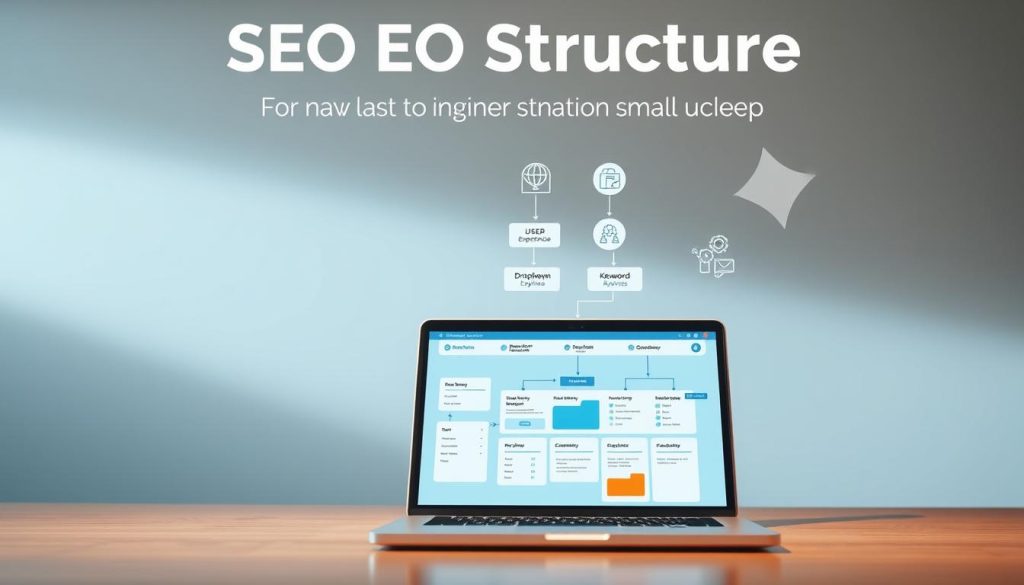
- Simplify navigation so each page is reachable in a few clicks.
- Use internal links to highlight priority pages and guide visitors.
- Plan folders and URLs to reflect site topics and services.
- Design the site to scale—add new pages without breaking flow.
Outcome: simpler paths, more indexed content, better engagement, and improved search results for your business.
Creating High-Quality Content That Ranks
Good content does more than inform — it proves experience and earns trust from readers and engines.
Demonstrating EEAT
Expertise, experience, authority, and trust matter. Use real author bios, case examples, and clear sourcing to show expertise.
We recommend adding customer examples and data points that validate claims. This helps the business appear credible to both people and search engines.
Formatting for Readability
Short paragraphs and clear subheads make pages easy to scan. Use lists and bolded calls to action to guide visitors.
Keep sentences direct. Break dense ideas into separate lines so readers move quickly from question to answer.
Repurposing Old Content
Refresh dated pages with new data, internal links, and updated keywords. Repurposing saves time and keeps your site fresh.
With organic search driving 53% of online traffic, updated content often returns more visitors and leads.
| Action | Why it helps | Quick tip |
|---|---|---|
| Author bio | Builds trust and authority | Include credentials and links |
| Readable layout | Improves time on page | Use short paragraphs and lists |
| Content refresh | Recaptures lost traffic | Update stats and add links |
“Answer real questions clearly, and your pages will earn steady traffic and conversions.”
Building Authority Through Backlinks and Partnerships
Backlinks and local partnerships turn good pages into trusted signals that search engines notice.
Quality over quantity. One link from a respected local paper or industry site beats dozens of low-value entries. Links act as votes that help pages rank higher in search results.
Partner with nearby businesses and nonprofits. Joint events, guest posts, and resource pages often lead to natural links. These ties also send referral customers to your website.
Get listed in reputable directories and local chambers. Consistent listings help engines verify your business details and improve local visibility.
| Action | Benefit | Quick tip |
|---|---|---|
| Guest post on local publisher | Relevant link and exposure | Pitch a local angle or case study |
| Directory listing | Verified citations and trust | Keep NAP consistent across sites |
| Collaborative event | Referral traffic and links | Share post-event coverage with partners |
We monitor backlink health and flag risky links that could harm rankings. Our approach keeps link growth steady and sustainable.
“Every high-quality link is a vote of confidence that helps your site reach the right people.”
Leveraging Local Search and Google Business Profile
A well-managed local profile turns online interest into foot traffic and phone calls. Claiming your listing is the first step to appearing in google maps and relevant search results.
Managing NAP Citations
Keep your name, address, and phone consistent across directories. Mismatched entries confuse people and search engines and reduce visibility.
Run a citation check and fix variants of your address and phone. Consistent NAP boosts trust and helps pages rank in local search.
Optimizing Business Profiles
Add clear categories, up-to-date hours, and high-quality photos. Regular posts and accurate service details increase requests for directions and calls.
Respond to reviews quickly and professionally. Replies build trust with customers and signal activity to search engines and google search.
- Select precise categories so the listing shows for the right services.
- Use concise descriptions with target keywords and your key services.
- Update photos and posts to keep the profile active and useful.
“With 46% of searches seeking local information and 72% of local searchers visiting a store within five miles, the google business profile is a direct driver of nearby traffic.”
We help owners claim listings, manage citations, and optimize profiles so the site and profile work together. This focused local approach improves visibility and brings more customers through the door.
Adapting Your Approach for the Age of AI
As AI summarizes the web, content that answers questions plainly gets cited more often. Focus on clarity, usefulness, and original insight to keep your business visible in modern search results.
Write short, direct answers to common queries. Aim for 50–60 word responses on key pages. These bite-sized answers perform well in voice assistants and AI summaries.
Structure pages with clear headings, quick facts, and obvious takeaways. Use simple language so people and engines parse your site fast.
Monitor how your website appears in AI-driven results. Update content that loses visibility and keep unique examples that prove authority.
- Optimize short answers for featured snippets and voice queries.
- Keep originality high; AI favors unique, helpful material.
- Track mentions and adapt to new AI formats over time.
| Action | Why it Helps | Quick Tip |
|---|---|---|
| Short answer blocks | Better pickup by AI and voice | Place a 50–60 word summary near top |
| Unique case examples | Signals authority and trust | Add local data and customer outcomes |
| Format for machines & people | Works across engines and assistants | Use clear headings and bullet lists |
“Clarity and originality make a site a primary source for AI-driven answers.”
Measuring Performance and Tracking Results
Track what moves the needle: impressions, clicks, and conversions reveal which tactics drive growth.
Use Google Search Console to monitor impressions and clicks. That tool shows how often your pages appear in search and which queries lead people to your site.
Set clear goals for search visibility and lead generation. Track keyword rankings, organic traffic, and contact form submissions to see real impact on revenue.
Analyze links and authority. Review your backlink profile to judge site strength. Healthy links signal trust and help pages rank higher in search results.
- Compare traffic trends over time to spot issues or gains.
- Use a few reliable tools to avoid data overload.
- Track conversions to connect visits to customers.
Hiring an outside firm can speed results; industry estimates put that cost near $3,500 per month. Whether you DIY or hire help, data guides smarter choices and better returns.
“Good measurement turns guesses into priorities and real improvements.”
Conclusion
Focus on practical fixes, and the gains will add up across your pages.
Implement a consistent seo plan and track simple metrics. Results take time, but they compound into steady traffic and leads.
Prioritize the keywords that match customer intent. Audit and update pages regularly to keep performance strong. Small business owners who stick with these steps see better rankings and more calls.
We simplify the process and help measure progress. Start with one change, watch results, then repeat. That steady effort makes lasting growth possible for businesses.



