


Many business owners look for a magic number for their Google Ads budget. But, there’s no one number that fits all. Your budget should match your industry, the cost per click, and how much each customer is worth to you.
Some think throwing more money at ads will solve everything. But, more money can’t fix bad targeting, weak tracking, or a poor landing page. Success comes from balancing patience and analyzing data.
Before you judge if a campaign works, you need enough data. Good advertising spending means testing, measuring, and improving. By looking at your conversion rates and return on investment, you can find the best way to grow your business.
Key Takeaways
- There is no one-size-fits-all amount for marketing investments.
- Success relies on conversion rates and customer value, not just total spend.
- Higher investment levels can’t make up for a bad landing page.
- Collecting data is key before judging campaign success.
- Focus on testing and refining your strategy for better long-term results.
Understanding Google Ads and Its Importance for Small Businesses
Google Ads connects your business with customers when they search for solutions. It’s different from billboards or print ads because you only pay when someone clicks on your ad. This means you only spend money when someone shows real interest.
Overview of Google Ads
Google Ads works like an auction. Businesses bid on keywords that people search for. When someone searches, Google shows ads based on the bid and ad quality.
This way, you reach people who are actively looking for what you offer. You don’t pay for ads that don’t interest anyone. This helps you control your online advertising costs better than traditional media.
Benefits of Using Google Ads
Google Ads is great because it’s measurable. You can see who saw your ad, clicked it, and became a customer. This makes planning your marketing budget easier.
While cost per click is important, it’s not everything. A low click price doesn’t matter if it doesn’t lead to sales. Good campaigns focus on lead quality and return on investment, not just cheap clicks.
| Channel Type | Measurement | Budget Control | Targeting |
|---|---|---|---|
| Google Ads | High Precision | Real-time | Intent-based |
| Print Media | Low/Estimated | Fixed | Demographic |
| Social Ads | Moderate | Flexible | Interest-based |
Why Small Businesses Should Consider Online Advertising
Small businesses often have limited budgets and can’t afford to waste money. Google Ads is a flexible entry point. You can start small and grow as you see results.
By focusing on search intent, you show your brand to people ready to buy. This means your online advertising costs go to high-intent traffic. Balancing cost per click with revenue is key to growing sustainably.
Determining Your Google Ads Budget: Key Factors
Creating a solid Google Ads budget means more than just guessing. It’s about aligning your spending with your revenue goals. This way, your ads become a reliable way to grow your business.
A good digital marketing budget is like a roadmap for your business. It connects your spending to lead targets and conversion rates. This lets you scale your ads when they’re working well. Think of your paid search as a way to get new customers at a cost you can afford.
Business Goals and Objectives
Your PPC budget should be based on your business’s math. First, figure out your target cost per lead and average profit per sale. Knowing the value of a new customer helps you set a budget for getting them.
Decide how much of your marketing budget should go to paid search. This ensures your online efforts support your company’s goals without draining resources. Being clear about this helps avoid overspending and keeps your financial goals in sight.
Target Audience and Market Research
The size and location of your audience affect your budget. A local business will need a different Google Ads budget than a national brand. You need to know the search volume in your area to reach enough customers.
Knowing where your audience is online helps you target better. Focusing your ads means you spend less on clicks that won’t convert. This is key to a smart digital marketing budget.
Industry Competitiveness
The competitiveness of your industry also impacts your budget. In competitive sectors, you’ll need to spend more on ads to stand out. You need enough money to test different ads and keywords to find what works best.
The table below shows how different factors affect your budget:
| Factor | Low Competition Impact | High Competition Impact |
|---|---|---|
| Cost Per Click | Lower entry barrier | Requires higher bids |
| Search Volume | Niche, specific intent | Broad, high demand |
| Testing Needs | Minimal budget required | Significant budget for data |
| Strategy Focus | Brand awareness | Aggressive conversion |
Your PPC budget should be flexible for learning. Start with a budget that allows for meaningful testing while keeping a safety margin. As you collect data, adjust your spending to get the best return on investment.
Typical Google Ads Budgets for Small Businesses
Finding the right Google Ads budget is more than just a number. Every market is different, so there’s no one-size-fits-all budget. Your budget should match your goals, the competition in your field, and how fast you want to grow.
Industry Benchmarks
Online advertising costs vary a lot by industry. For example, industries like legal services or insurance have a lot of competition. This competition makes keywords more expensive.
On the other hand, niche local businesses might have an easier time getting started. Look at what your competitors are spending. This helps you set a budget based on real data, not guesses.
Average CPC (Cost per Click) Insights
The cost per click is key to stretching your budget. If your industry’s average CPC is $5.00, a $500 budget gets you about 100 clicks. But if it’s $50.00, you get only 10 visits.
This shows why the same ad spend can have very different results. Focus on high-intent keywords to make every dollar count. Choosing quality over quantity is usually best for smaller budgets.
Monthly Spend Expectations
Small businesses often start with a small Google Ads budget to test the waters. A budget of $500 to $1,000 is good for a local campaign or niche service. It lets you see what works without spending too much.
As you grow, you might increase your cost per click to reach more people. Budgets of $2,500 to $5,000 are common for businesses looking to expand. The goal is to find a balance of online advertising costs that brings in profitable leads.
Setting Up Your Google Ads Campaign
A clear account structure makes complex data easy to understand. It helps you manage your campaign budget better. You can focus on specific services, products, or areas more easily.
Account Structure and Campaign Types
Group your campaigns by themes that match your business. For example, if you offer plumbing and heating, have separate campaigns for each. This way, you can spend more on the most profitable services.
Here are some tips to make managing easier:
- Segment by location: Use different campaigns for each city to adjust bids.
- Group by intent: Keep high-intent searches separate from general queries to save money.
- Use clear naming conventions: Name campaigns by product or service for quicker reporting.
Keyword Research and Selection
The keywords you pick affect who sees your ads and how much you pay. Broad match keywords reach more people but can waste money. Specific keywords target users who are ready to buy.
Your choice of match type affects your cost per click. Using specific keywords can lead to a more stable cost per click. This helps keep your campaign budget steady over time.
Creating Compelling Ad Copy
Your ad copy must match the user’s search intent. When someone clicks your ad, they expect to find what you promised. Make sure your headlines and descriptions clearly state your offer or unique value.
Include a strong call to action that tells users what to do next. Most importantly, make sure your landing page matches your ad copy. Consistent messaging from start to finish leads to better results.
Tracking ROI: Evaluating Google Ads Effectiveness
Success in advertising is about the money, not just clicks. High traffic numbers are tempting, but your ad spend must lead to real business growth. This is what makes it effective.
Business owners should look beyond basic data. Focus on metrics that help your money work towards your financial goals.
Key Performance Indicators (KPIs) to Monitor
Cost per click is good for budget planning, but it’s not everything. Focus on metrics like qualified leads, booked appointments, and sales. These show if your ads are really helping your business.
Tracking cost per lead or customer acquisition cost helps you see if you’re making money. These numbers tell you if your strategy is working or if you need to change to boost your gross profit margins.
How to Measure Conversions
Conversions are key to knowing if your ads are working. You need to set up conversion tracking to link ad clicks to actions like form submissions or purchases.
This lets you see which campaigns are worth the most. Knowing which ads bring in customers means you can spend more on the best ones.
Importance of A/B Testing
A/B testing is essential for improving your ads. It compares two versions of an ad to find out which works better. This could be different headlines, images, or calls to action.
This ongoing process helps you spend less on cost per click while getting more conversions. Continuous improvement is key to a successful campaign. It ensures your budget is used wisely.
Budgeting Strategies for Google Ads
Managing your digital marketing budget is all about finding a balance. You need to mix proven results with new chances. This way, you use your money wisely and keep room for growth.
Flexible Budgeting Based on Performance
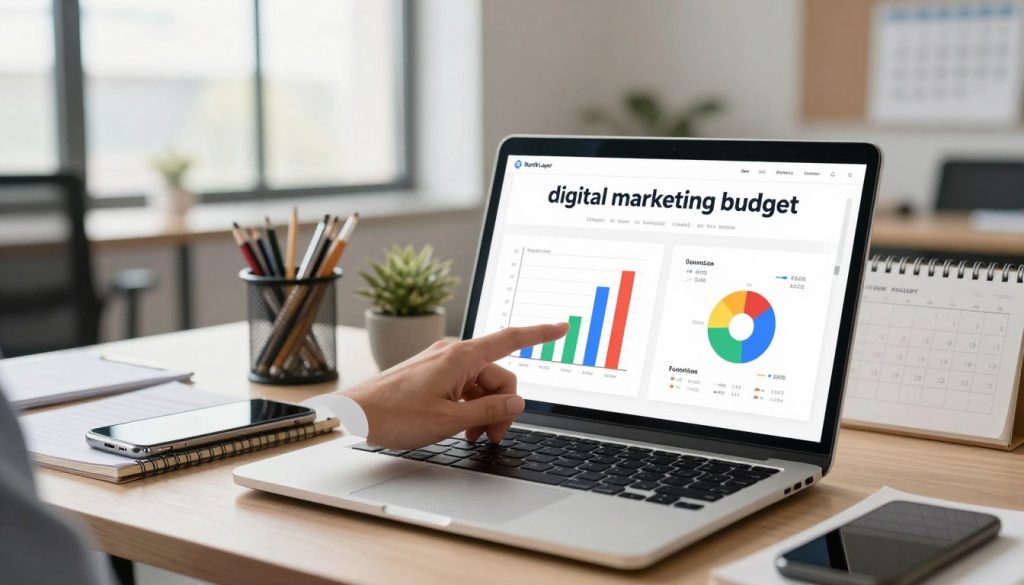
One good way to handle your PPC budget is the 70-20-10 rule. It says to spend 70% on campaigns that work well and bring in sales.
Then, 20% goes to trying out new keywords or groups of people. The last 10% is for taking big risks or trying new things. This keeps your main income safe while letting you try new ideas.
Allocating Budget Across Campaigns
It’s important to know the difference between your total marketing budget and what you spend on Google Ads. This way, you don’t spend too much on one thing and not enough on others.
When deciding how to spend your campaign budget, think about how much money each product or service makes. Spend more on things that make more money to get the best return on your investment.
Utilizing Daily vs. Monthly Budgets
Daily budgets help control how much you spend each day. They keep your spending in check and prevent big surprises.
But, looking at your spending each month gives you a clear picture of how you’re doing. This way, you can adjust your campaign budget to match the seasons or changes in the market.
| Strategy | Primary Goal | Risk Level | Allocation |
|---|---|---|---|
| Core Campaigns | Consistent ROI | Low | 70% |
| Growth Testing | New Leads | Medium | 20% |
| Experimental | Innovation | High | 10% |
By sticking to this plan, your marketing budget stays flexible. This lets you grow what works and cut what doesn’t. It keeps your digital marketing budget strong and effective.
Adjusting Your Google Ads Budget Over Time
Your Google Ads budget changes as your business grows. Don’t make big changes too soon. Wait for enough data to see how well your ads are doing.
When to Increase Your Budget
Only scale your advertising spending when your ads show solid results. Look for steady conversions and high-quality leads. When your customer economics are positive, it’s time to invest more to grow your market share.
Scaling too quickly can be inefficient. Make sure your setup is stable and your costs are in line. Once you’ve proven your success, you can safely increase your budget for more growth.
Signs That You Should Decrease Spending
Not every campaign works as planned. Spotting warning signs is key to saving money. High wasted searches or weak conversion rates mean it’s time to rethink your strategy.
Also, cut your ad spend if you’re out of budget early without getting good leads. This often means you’re bidding on the wrong keywords. Lowering your spending helps you focus on better strategies.
Staying Agile in Your Advertising Strategy
Being agile means regularly reviewing your ad spend instead of reacting to daily changes. Set a schedule, like every two weeks or monthly, to check your metrics. This helps you make smart decisions based on trends, not short-term changes.
Having a flexible Google Ads budget lets you adapt to market changes. Stay alert and disciplined to keep your advertising spending on track with your business goals.
Utilizing Google Ads Tools and Resources
Google offers a range of tools to boost your ads. These tools help you plan better, focusing on what grows your business. They show you how your money works in real results.
Google Ads Keyword Planner
The Keyword Planner is key for starting your campaign. It shows search volume and competition for your terms. But, remember, these are not guaranteed outcomes.
It’s a guide to find the best search terms. This helps you plan your campaign better. It’s not for exact money predictions.
Performance Insights and Reporting Tools
Understanding your metrics is key. Google’s dashboard lets you see your cost per click and conversion rates. This helps you decide where to spend your money.
By watching these numbers, you see which ads work and which don’t. Tracking leads and revenue shows your investment’s return. Regular checks keep you on track with your money goals.
Leveraging Third-Party Tools for Optimization
Automation tools save time by doing tasks like adjusting bids. They offer deep analytics for better cost per click strategies. But, don’t forget your own judgment.
Always check your ads and results yourself. Automation is great, but your understanding of customers is key. Mixing smart tools with your insight makes a strong ad plan.
Common Pitfalls in Google Ads Budgeting
Many small businesses lose money on Google Ads because of wrong assumptions. Starting without understanding the digital market can lead to wasted ad spend. This happens before you can even measure how well your ads are doing.
It’s key to avoid these common mistakes to get the most from your marketing. Spotting these errors early helps save your budget and focus on growing your business.
Inaccurate Budget Forecasting
Owners often underestimate online advertising costs by overlooking local competition and search volume. Guessing your budget without keyword research can quickly deplete your funds. This makes it hard for your ads to start working well.
Not planning for realistic conversion rates and customer value is another mistake. Knowing the value of a lead is vital. It ensures your budget matches your revenue goals.

Overlooking Negative Keywords
Not using negative keywords is a common way to waste money. These keywords tell Google when not to show your ads. This stops your budget from being wasted on irrelevant searches.
Without negative keywords, you might pay for clicks from people looking for free services or unrelated products. Refining your keyword list is a simple way to target only high-intent traffic.
Ignoring Ad Quality and Relevance
A low cost per click can be a trap if the traffic isn’t likely to become a customer. If your ad copy doesn’t match your landing page, Google will give you a low Quality Score. This means you’ll have to pay more for the same results.
Relevance is the key to efficiency. When your ads, keywords, and landing pages align, you improve your auction position. This ensures every dollar of your ad spend brings in qualified leads, not just empty clicks.
Success Stories: Small Businesses Excelling with Google Ads
Success in digital ads often depends on managing your PPC budget well. Instead of guessing, successful businesses see their ads as a precise investment. They aim to link every dollar to real results like more leads and new customers.
Case Studies of Effective Campaigns
A local home services company had trouble getting consistent leads. They changed their marketing budget to focus on search terms that showed they were ready to buy. This led to a 30% jump in booked appointments in just three months.
They didn’t just spend more; they targeted better. They aimed at homeowners looking for their services.
A boutique e-commerce brand also made smart choices. They used smart bidding to spend their PPC budget on products that made the most profit. This way, they got better returns on their ads. They scaled up without wasting money on traffic that didn’t convert well.
“The secret to successful advertising is not the size of the wallet, but the clarity of the strategy and the discipline of the execution.”
Lessons Learned from Successful Advertisers
Successful advertisers put quality over quantity. They know a big marketing budget can’t fix a bad campaign. They focus on these key points:
- Disciplined Testing: They test small to find the best ads.
- Focused Scope: They don’t spread their budget too thin.
- Continuous Optimization: They keep improving by cutting bad keywords and boosting the good ones.
These businesses see their ads as a dynamic system that needs constant care. By being quick to adapt and data-driven, they make sure every dollar helps grow their business over time, not just for a quick win.
Expert Tips for Optimizing Your Google Ads Budget
Small businesses can get more from their ad spend by managing it wisely. Instead of just throwing more money at a campaign, focus on making every dollar count. This way, you protect your Google Ads budget and reach the right people at the right time.
Fine-Tuning Your Targeting
Being precise is key to effective advertising spending. If your ads don’t reach interested people, you’re wasting money. Narrow your focus to areas where your customers live or work to improve results.
Also, match your keywords with what users are searching for. Use negative keywords to block irrelevant traffic. Here are steps to improve your targeting:
- Review search term reports to identify and exclude irrelevant queries.
- Use location targeting to focus on high-performing cities or neighborhoods.
- Match your ad copy to the specific intent behind a user’s search.
Enhancing Your Ad Quality Score
A higher Quality Score can lower your costs. Google favors ads that match user searches, saving you money. When your ad is relevant, you pay less per click, keeping your Google Ads budget healthy.
To boost your score, make sure your ad copy matches your keywords. Your landing page should also offer a seamless experience. Consistency between your keywords, ads, and landing pages is key to success.
Retargeting Strategies
Not everyone converts on their first visit. Retargeting keeps you in mind by showing ads to those who’ve interacted with your brand. It’s often cheaper than targeting new audiences.
By focusing on users who’ve shown interest, you boost conversion chances. Use these tactics to improve your retargeting:
- Create custom audiences based on specific pages visited on your site.
- Offer a special incentive to encourage returning visitors to complete a purchase.
- Set frequency caps to ensure you are not overwhelming your audience with too many ads.
Optimizing your advertising spending is an ongoing process. Stay agile and keep an eye on your performance to stay competitive without overspending.
Conclusion: Finding the Right Google Ads Budget for Your Business
Finding the right Google Ads budget is more than just counting clicks. It’s about focusing on what really matters for your business.
Balancing Investment and Expected Returns
For small businesses, a good starting point for Google Ads budget is $1,000 to $2,500 a month. If you’re in a competitive field or have a big area to cover, you might need to spend $3,000 to $5,000 or more to stay seen.
Look at your budget through the lens of qualified leads, actual customers, and profit. This way, your ad spending is linked to real growth, not just numbers.
Encouragement to Experiment and Learn
Getting good at digital ads takes time and effort. Start small and watch your results to see what works for your audience.
Track your campaigns well to find out which ones are worth it. Increase your spending slowly as your data shows positive results. Keep testing and improving to build a strong ad strategy for your business.
FAQ
Is there a universal Google Ads budget that works for every small business?
How does the pay-per-click model benefit my marketing budget?
Why is cost per click (CPC) not the only metric I should focus on?
How much data do I need before I can judge my campaign’s performance?
Can a larger campaign budget compensate for a weak website or landing page?
What are typical monthly spend expectations for a focused campaign?
FAQ
Is there a universal Google Ads budget that works for every small business?
No. A Google Ads budget varies greatly. It depends on your industry, location, and goals. What works for one business might not work for another.
For example, a business in a competitive field like legal or insurance might need to spend more. This is because they need more data to optimize their ads effectively.
How does the pay-per-click model benefit my marketing budget?
The PPC model is different from traditional media. You only pay when someone clicks on your ad. This makes your digital marketing budget easier to track.
You can see exactly how much you spend to get a lead or sale. This is more transparent than other marketing channels.
Why is cost per click (CPC) not the only metric I should focus on?
While cost per click shows how much traffic you can buy, it’s not everything. A low CPC doesn’t mean much if the traffic doesn’t turn into customers.
We focus on the quality of leads and the revenue they bring. This ensures your ad spend is an investment, not just a cost.
How much data do I need before I can judge my campaign’s performance?
Don’t make big decisions after just a few days. It takes at least 30 to 90 days of consistent online advertising costs to understand your campaign’s performance.
Too early judgments can disrupt Google’s learning phase. This can harm your campaign’s performance.
Can a larger campaign budget compensate for a weak website or landing page?
No. More advertising spending won’t help if your website or landing page isn’t converting. This is known as wasted spend.
Before increasing your ad spend, make sure your landing pages are relevant and professional. They should have a clear call to action to maximize your marketing budget.
What are typical monthly spend expectations for a focused campaign?
Small businesses often start with
FAQ
Is there a universal Google Ads budget that works for every small business?
No. A Google Ads budget varies greatly. It depends on your industry, location, and goals. What works for one business might not work for another.
For example, a business in a competitive field like legal or insurance might need to spend more. This is because they need more data to optimize their ads effectively.
How does the pay-per-click model benefit my marketing budget?
The PPC model is different from traditional media. You only pay when someone clicks on your ad. This makes your digital marketing budget easier to track.
You can see exactly how much you spend to get a lead or sale. This is more transparent than other marketing channels.
Why is cost per click (CPC) not the only metric I should focus on?
While cost per click shows how much traffic you can buy, it’s not everything. A low CPC doesn’t mean much if the traffic doesn’t turn into customers.
We focus on the quality of leads and the revenue they bring. This ensures your ad spend is an investment, not just a cost.
How much data do I need before I can judge my campaign’s performance?
Don’t make big decisions after just a few days. It takes at least 30 to 90 days of consistent online advertising costs to understand your campaign’s performance.
Too early judgments can disrupt Google’s learning phase. This can harm your campaign’s performance.
Can a larger campaign budget compensate for a weak website or landing page?
No. More advertising spending won’t help if your website or landing page isn’t converting. This is known as wasted spend.
Before increasing your ad spend, make sure your landing pages are relevant and professional. They should have a clear call to action to maximize your marketing budget.
What are typical monthly spend expectations for a focused campaign?
Small businesses often start with $1,000 to $5,000 per month. This depends on the competitive landscape.
Local businesses might start lower, while national businesses might spend more. The key is to match your PPC budget to your target area’s search volume.
How does the 70-20-10 rule apply to my digital marketing budget?
Allocate 70% of your Google Ads budget to proven keywords and campaigns. These should drive steady leads.
20% should go to promising new opportunities or secondary services. The final 10% is for testing new formats or audiences. This keeps your ad spend fresh and prevents stagnation.
When is the right time to increase my advertising spending?
Increase your campaign budget when you’ve shown reliable conversion volume and acceptable customer acquisition cost. If every dollar of ad spend is profitable, you can capture more market share by spending more.
What are the biggest “money pits” that cause wasted ad spend?
Common pitfalls include ignoring negative keywords and having a low Quality Score. If your ads aren’t relevant, Google will charge more for clicks. This makes your digital marketing budget less efficient.
How can I make my Google Ads budget more efficient without spending more money?
Improve your targeting to make your budget go further. Use negative keywords, narrow your geographic focus, and boost your Quality Score.
This can lower your online advertising costs and get more conversions from the same PPC budget.
Local businesses might start lower, while national businesses might spend more. The key is to match your PPC budget to your target area’s search volume.
How does the 70-20-10 rule apply to my digital marketing budget?
Allocate 70% of your Google Ads budget to proven keywords and campaigns. These should drive steady leads.
20% should go to promising new opportunities or secondary services. The final 10% is for testing new formats or audiences. This keeps your ad spend fresh and prevents stagnation.
When is the right time to increase my advertising spending?
Increase your campaign budget when you’ve shown reliable conversion volume and acceptable customer acquisition cost. If every dollar of ad spend is profitable, you can capture more market share by spending more.
What are the biggest “money pits” that cause wasted ad spend?
Common pitfalls include ignoring negative keywords and having a low Quality Score. If your ads aren’t relevant, Google will charge more for clicks. This makes your digital marketing budget less efficient.
How can I make my Google Ads budget more efficient without spending more money?
Improve your targeting to make your budget go further. Use negative keywords, narrow your geographic focus, and boost your Quality Score.
This can lower your online advertising costs and get more conversions from the same PPC budget.



