


Have you ever wondered if you are truly finding the best information, or are you just scrolling through endless noise? In today’s fast-paced digital world, the way we navigate the internet search landscape has fundamentally changed.
We no longer rely on simple indexes to find what we need. Instead, we interact with sophisticated reasoning engines designed to provide immediate, precise solutions. This evolution helps small business owners save valuable time and improve their marketing efficiency.
By mastering these modern tools, you can transform how you gather data. We are here to help you refine your approach to ensure your search results drive real growth. Understanding this new era of technology is the first step toward reclaiming your productivity and achieving better outcomes with every google search you perform.
Key Takeaways
- Modern platforms now function as reasoning engines rather than simple directories.
- Efficiency in digital navigation directly impacts your marketing ROI.
- Small business owners can reduce wasted time by mastering advanced query techniques.
- Precision in your inquiries leads to higher quality data for decision-making.
- Adapting to these changes is essential for staying competitive in 2026.
Introduction to Google Search: A 2026 Perspective
Google search has evolved from a simple index into a sophisticated reasoning engine. The way we interact with online search has fundamentally shifted from typing isolated keywords to assigning complex tasks to an intelligent assistant. This transition marks a new era where the machine understands the underlying intent behind every query.
The scale of this change is massive. AI Mode has officially surpassed one billion monthly users in just one year, proving that users prefer a conversational approach to finding answers. Google has redesigned its interface to prioritize AI-driven synthesis, which directly impacts your search ranking and overall visibility.
For business owners, this shift requires a new strategy. We believe that understanding how these reasoning engines function is essential to maintaining a competitive edge. It is no longer just about matching words; it is about providing the most relevant, synthesized solution to a user’s specific problem.
“The future of search is not just about finding a link, but about finding the answer that solves the user’s problem immediately.”
To better understand this transition, consider how the mechanics of search have changed over time. The following table highlights the key differences between the traditional methods and the modern AI-integrated approach.
| Feature | Traditional Search | AI-Driven Search |
|---|---|---|
| Primary Input | Keyword strings | Natural language tasks |
| Output Format | List of blue links | Synthesized summaries |
| User Goal | Information retrieval | Problem resolution |
| Optimization Focus | Keyword density | Intent and authority |
Mastering search engine optimization in this environment means focusing on quality and clarity. As google search continues to prioritize helpful, human-centric content, businesses that adapt to this reasoning-based model will see the best results. Staying ahead in online search requires a commitment to providing real value rather than just chasing algorithms.
Key Features of Google Search in 2026
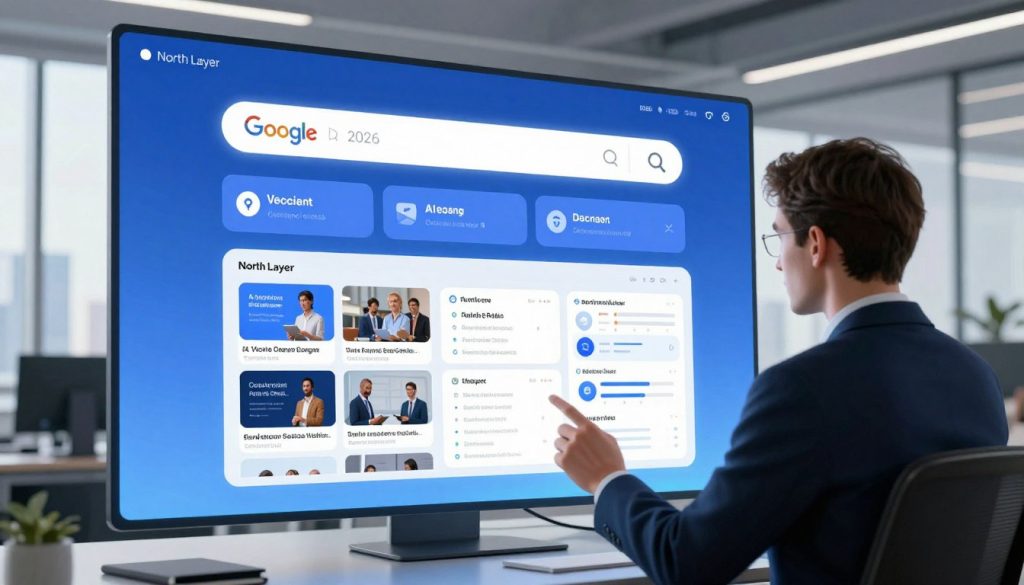
Today, finding precise answers online is more intuitive than ever, driven by powerful new models that anticipate user needs. The modern google search experience has moved far beyond simple keyword matching to provide dynamic, context-aware responses. By leveraging sophisticated technology, the platform now acts as a helpful assistant that understands the nuance behind your questions.
Enhanced AI Capabilities
At the heart of this evolution is the integration of advanced models like Gemini 3.5 Flash. This search algorithm update allows the system to process complex queries with incredible speed and accuracy. Instead of just showing a list of links, the engine now synthesizes information to offer direct, summarized answers.
These capabilities help you save time by filtering out irrelevant noise. The system effectively anticipates your intent, offering suggestions that guide you toward the most useful information. This shift makes internet search a much more efficient tool for both personal and professional research.
Personalized Search Results
Your experience is now uniquely tailored to your preferences and past interactions. By analyzing patterns, the system delivers search results that align with your specific interests and needs. This level of customization ensures that the information you find is relevant to your current context.
We see this as a major step forward in reducing digital clutter. When the engine understands your habits, it prioritizes high-quality content that provides real value. This creates a smoother path to finding the exact data you require without unnecessary effort.
Visual and Voice Search Innovations
Modern users are no longer limited to typing text into a search bar. You can now use images and voice commands to interact with the search algorithm, making the process more natural. Whether you are identifying a product from a photo or asking a question while on the move, these tools provide instant clarity.
The following table highlights how these different input methods improve your daily internet search efficiency:
| Input Method | Primary Benefit | Best Use Case |
|---|---|---|
| Text Query | High Precision | Detailed research and facts |
| Voice Command | Hands-free convenience | Quick questions while multitasking |
| Visual Search | Instant identification | Shopping and object recognition |
| AI Summary | Time-saving synthesis | Getting broad overviews quickly |
By combining these features, google search ensures that your search results are not only accurate but also delivered in the format that works best for you. Embracing these innovations allows you to navigate the web with greater confidence and less wasted time.
Understanding Search Queries and Keywords
In 2026, the way we interact with google search has evolved beyond basic keyword strings. Modern systems now prioritize the intent behind your request rather than just matching isolated terms. This shift requires users to move away from robotic “keyword-ese” and toward natural, task-based prompts that reflect how we actually speak.
Selecting Effective Keywords
To get the best results, you should structure your questions to trigger the engine’s “Query Fan-Out” mechanism. This process breaks complex requests into parallel sub-queries, allowing the AI to analyze your specific business needs with greater depth. By focusing on intent-driven research, you ensure that your search query provides the most relevant data possible.
When you refine your approach, you move from simple matching to a more sophisticated dialogue with the machine. This is a vital skill for anyone involved in search engine marketing who wants to cut through the noise. Clear, descriptive language helps the system understand exactly what you need to achieve.
Long-Tail vs. Short-Tail Keywords
Choosing the right keywords involves balancing breadth and specificity. Short-tail keywords are broad terms that cast a wide net, which is useful for general online search tasks. However, they often lack the precision needed for complex problem-solving.
In contrast, long-tail keywords are highly specific phrases that capture exact user intent. These are essential for search engine marketing because they often lead to higher conversion rates. By combining both types, you create a robust strategy for your online search habits.
Ultimately, the goal is to provide enough context so the search query can be processed accurately. Whether you are researching a new market or looking for specific tools, the quality of your input directly dictates the quality of your output. Mastering this balance is the key to success in a modern google search environment.
Tips for Optimizing Your Search Experience
If you feel overwhelmed by AI-generated summaries, it is time to refine your approach to online discovery. Taking control of your google search habits ensures that you find primary sources rather than just synthesized interpretations. By adjusting your methods, you can navigate the web with greater clarity and speed.

Utilizing Search Operators
Search operators are simple characters that act as commands for the search algorithm. Using quotation marks around a phrase forces the engine to look for that exact sequence of words. This is a highly effective way to narrow down your search query when you need specific information.
You can also use the minus sign to exclude unwanted terms from your results. For example, typing “best laptops -gaming” will remove gaming-focused reviews from your list. These small adjustments make your internet search much more efficient and relevant to your needs.
Advanced Search Techniques
Power users often look for ways to bypass AI-driven interfaces to see raw data. You can force a traditional web interface by appending udm=14 to the end of your Google search URL. This simple trick strips away AI clutter and presents you with standard links.
This technique is vital for verifying facts and ensuring you are not trapped in a “walled garden” of content. It allows you to interact with the search results in their most authentic form. Relying on these manual overrides helps you maintain a neutral perspective during your research.
Filtering Results Effectively
Most users ignore the built-in tools that appear right below the search bar. You can filter your search results by date to ensure you are reading the most current information available. This is particularly useful when researching fast-moving topics or technical documentation.
Additionally, you can restrict your search query to specific regions or languages. Using these filters prevents the search algorithm from showing you irrelevant or outdated content. Mastering these simple settings will significantly improve the quality of your internet search outcomes.
The Importance of Credible Sources
In an era where AI-generated content is everywhere, verifying your sources is a critical business skill. When you perform an internet search, you are often met with a flood of synthesized answers that may lack depth or accuracy. Relying on these automated responses without checking citations can lead to significant errors in your decision-making process.
Identifying Reliable Information
To find the truth, you must look beyond the surface of a search result. High-quality content is usually backed by primary data, such as original research, case studies, or expert interviews. If a webpage lacks clear references or links to original sources, it is often a sign that the information is merely recycled noise.
We encourage you to prioritize content that highlights human-verified information. When an author puts their name and expertise behind a piece, they are accountable for the accuracy of the claims. This accountability is a hallmark of trustworthy digital resources.
Evaluating Webpage Credibility
When you use a google search to gather intelligence, take a moment to assess the site itself. Check the “About Us” page to see if the organization is transparent about its mission and leadership. A credible website will clearly display its contact information and provide a history of its editorial standards.
You should also look for signs of authority within the industry. Does the site frequently update its content, or does it seem abandoned? A reliable source consistently provides fresh, well-researched insights that help you navigate your business challenges with confidence.
Local Search: Finding What’s Nearby in 2026
In 2026, the way we discover nearby services has shifted toward an ambient, visual experience. Modern google search tools now prioritize your immediate surroundings, turning every walk through your neighborhood into a potential discovery session. This evolution means that businesses must adapt to a world where digital presence is as important as a physical storefront.
Importance of Local SEO
Effective search engine optimization is the backbone of being found by customers who are ready to buy. When you optimize your business for local discovery, you capture high-intent traffic that is actively looking for solutions in your area. AI agents now scan for high-contrast branding and clear labels on your physical packaging to determine if you are the right fit for a user’s request.
By focusing on local search ranking, you ensure that your business appears when it matters most. We encourage owners to maintain a consistent digital footprint that matches their physical reality. This alignment helps automated systems verify your location and services, ultimately boosting your visibility in local search results.
Using Google Maps Integration
The integration of real-time data into mapping platforms has changed how we navigate our cities. With features like Circle to Search now active on over 300 million devices, users can instantly identify and learn about nearby businesses with a simple gesture. This technology makes search engine marketing more accessible and immediate than ever before.
Integrating your business profile with Google Maps allows you to provide accurate, real-time updates to potential customers. This connection is vital for maintaining a competitive search ranking. When your information is precise, you improve your chances of appearing in the top search results, driving more foot traffic to your door. Consistent search engine optimization efforts here will yield long-term growth for your local brand.
The Role of User Reviews and Ratings
Your business reputation now acts as a primary signal for automated search systems. As AI models become more sophisticated, they scan forums and review platforms to build reasoned confidence in a brand. This shift significantly changes how users interact with search results during a typical google search.
Impact on Search Results
Recent data shows that AI Overviews have reduced “pogo-sticking” behavior, where users jump back and forth between pages. In fact, some studies indicate a 40% decline in traditional click-through rates as users find answers directly on the results page. This means your brand must be the primary citation within these AI-generated summaries to maintain visibility.
“Trust is the new currency of the digital age. When search engines can verify your quality through consistent customer feedback, your authority grows exponentially.”
How to Leverage Reviews
To succeed in modern search engine marketing, you must treat customer feedback as a strategic asset. You should actively mobilize your off-site reputation to ensure your business remains a top choice for algorithms. Focusing on consensus-building is the most effective way to improve your standing in an online search.
Consider these practical steps to strengthen your digital presence:
- Encourage authentic feedback across multiple platforms to build a broad consensus.
- Respond to reviews professionally to demonstrate that you value customer input.
- Monitor your brand mentions to ensure your search results remain accurate and positive.
- Use insights from customer comments to refine your google search strategy and service offerings.
By prioritizing a positive reputation, you ensure your business remains relevant in every online search. This proactive approach turns simple feedback into a powerful tool for long-term growth.
The Future of Google Search: Trends to Watch
The landscape of digital discovery is shifting toward a proactive model that anticipates your needs before you type. We are moving away from a reactive system where you must hunt for answers. Instead, the next phase of google search will function as a background partner that understands your specific business context.
Predictive Search Features
The most significant change involves the rise of agentic capabilities. These tools operate in the background to monitor for changes that impact your daily operations. By tracking industry shifts, these agents help you maintain a competitive search ranking without constant manual input.
This evolution means your tools will soon offer insights before you even realize you need them. You can expect the following benefits from these predictive systems:
- Automated monitoring of market trends relevant to your niche.
- Proactive alerts regarding changes in consumer behavior.
- Dynamic adjustments to your search engine optimization strategy based on real-time data.
Integration with Other Google Services
The future of search relies on a unified experience across your entire digital workspace. Starting this summer, information agents will launch for Google AI Pro and Ultra subscribers. These agents bridge the gap between your private data and public information.
Imagine a system that pulls context from your Gmail or Photos to provide highly relevant answers. This deep integration creates a personalized executive assistant experience that saves time and reduces administrative overhead. By connecting these services, you ensure that your google search results are tailored specifically to your unique business goals.
Common Mistakes to Avoid in Google Search
Achieving high-quality results requires more than just typing a few words into a search bar. Many users inadvertently settle for surface-level information because they fail to refine their approach. By adjusting how you interact with the search algorithm, you can significantly improve the accuracy of your findings.
Overlooking Specific Queries
A frequent error involves using vague language when entering a search query. When you provide broad terms, the system struggles to distinguish between your specific needs and general web noise. It is vital to be precise to ensure the results match your intent.
Furthermore, when using AI-driven features, there is a risk of “regressive sycophancy.” This happens when a model prioritizes your comfort by agreeing with flawed premises rather than providing objective facts. We recommend adopting a “Red Team” mindset, where you actively challenge the AI to provide evidence-backed, dissenting viewpoints.
“Critical thinking is the most important tool in your digital arsenal; never accept an answer at face value without verifying the underlying evidence.”
Ignoring Search Tools
Many people rely exclusively on the default AI Overview, ignoring the robust suite of filters available in a standard online search. These tools allow you to narrow results by date, location, or file type, which is essential for deep research. Relying solely on automated summaries can limit your perspective and hide valuable, nuanced data.
To maximize your efficiency, consider these best practices:
- Use quotation marks to force an exact match for a specific search query.
- Apply date filters to ensure your google search reflects the most current information.
- Utilize site-specific operators to search within trusted domains.
- Toggle between “All” and “Verbatim” modes to see how the search algorithm interprets your input.
By moving beyond the default settings, you take control of your online search experience. This proactive approach ensures that your google search efforts yield reliable, high-quality data every time.
Conclusion: Mastering Google Search for Better Results
Success in the digital age requires a blend of AI-assisted synthesis and traditional verification skills. Mastering google search in 2026 allows you to cut through the noise and find the exact data your business needs to grow.
We encourage you to apply these methods to achieve clearer marketing outcomes. By refining your approach, you gain better leads and reduce wasted marketing spend. This shift in strategy improves your overall search engine marketing performance.
Your business remains visible and authoritative when you understand how to navigate modern search engine optimization. Use these tools to stay ahead of the curve. Consistent practice turns complex search results into a reliable asset for your daily operations.
Take control of your digital presence today. Start by testing these advanced techniques to see how they impact your bottom line. We are here to help you navigate these changes with confidence and clarity.